Country of Residence
Nigeria
Age
19
Project title
Benue BioFuel; Turning Waste into Energy, and Young People into Changemakers.
Project Summary: Describe your project in one sentence
To empower young people in Benue State to transform hazardous and underutilized agricultural residues into useful energy resources, while building safer communities, creating economic opportunities, and inspiring youth-led environmental action.
Website URL(s) or social media handles.
Project Category
My project is a brand new / emerging idea
Project Stage
Idea (We’re hoping to get started in the future)
Founding Story: What was the spark that led you to start your project? What was the "Aha!" moment that led you to get started and see the potential for this to succeed?
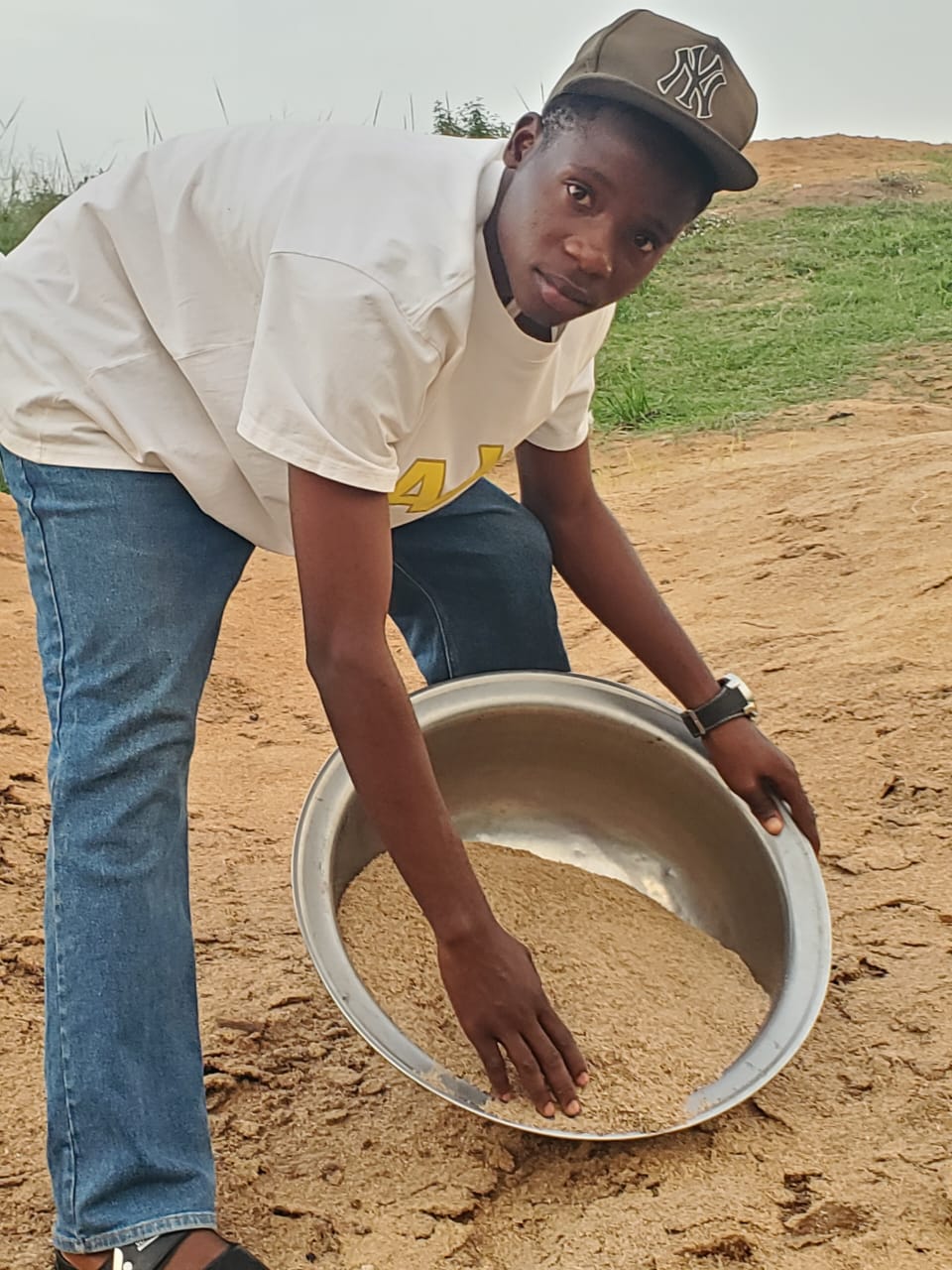
I watched my parents struggle to dispose of agricultural waste. I saw residues dumped around homes, along streets, in drains and near waterways. At rice mills, large heaps of husks accumulated over time. Some were set on fire, leaving piles that appeared harmless on the surface but could remain dangerously hot underneath. I was about ten years old when a boy in my community stepped onto a pile of burned rice husks. He believed the fire had gone out, but the husks were still burning beneath the surface. He sank into the hot pile and suffered terrible burns. The people around him could not immediately pull him to safety. I also witnessed other incidents in which children and adults suffered painful burns from these waste piles. Growing up around these dangers made me question something: Why should something produced through our community's hard work become a threat to the same people who produced it? My idea, Benue BioFuel, is to bring young people, farmers and local businesses together to turn suitable agricultural residues into biomass briquettes that can serve as an alternative fuel. I cannot change what happened to that boy, but his experience continues to remind me why this matters. I want to help build a future where agricultural communities see waste not as a burden or a hidden danger, but as an opportunity for innovation, livelihoods and positive change.
The Problem: What problem are you helping to solve? Why does it matter to you and your community?
Growing up in Adikpo, I witnessed farmers and processors struggle to dispose of rice husks, maize cobs and groundnut shells. These materials accumulate around homes, roads and milling sites, contributing to pollution and unsafe conditions. In Adikpo, large piles of rice husks have remained around processing locations for years. Some are set ablaze and continue burning beneath the surface, exposing residents, particularly children, to serious burn hazards. Beyond these dangers, valuable agricultural resources are wasted while households and small businesses struggle with cooking-fuel costs. Meanwhile, many young people lack opportunities to develop practical skills and earn sustainable incomes. This matters deeply to me because these are not distant problems. They affect the communities where I grew up and the families whose hard work feeds our state. I believe our agricultural strength should create opportunities, not environmental hazards. We need a safer, more productive way to manage these residues while empowering young people to become part of the solution.
Your Solution: How are you solving this problem? Share your specific solution.
Benue BioFuel is a youth-led initiative that will transform agricultural residues into affordable biomass briquettes while empowering young people to become environmental changemakers and create economic opportunities in their communities. We will begin in Adikpo, Benue State, where rice husks accumulate around milling sites, often creating environmental and safety hazards. Our solution connects farmers, rice mill operators, young people and local businesses through a community-based waste-to-energy model. First, we will establish youth-led Green Teams to work with farmers and processors to identify, collect and transport suitable agricultural residues, including rice husks, groundnut shells and maize cobs, from participating locations. Second, with technical guidance, we will train young people to process these materials into biomass briquettes through appropriate drying, preparation, compression and quality testing. The briquettes will be tested as an alternative cooking fuel for local food vendors, restaurants and small businesses. Third, our Green Teams will organize community awareness activities on safe agricultural waste management, the dangers of burning waste piles and the value of converting waste into useful resources. We will also engage local businesses to explore regular briquette purchases, creating potential income opportunities for young people and additional value for farmers and processors. Starting with a small pilot, we will measure waste recovered, youth participation, product performance and community adoption before expanding to other agricultural communities. Our goal is to replace dangerous waste practices with a youth-led system that protects communities, creates livelihoods and inspires lasting environmental action.
Impact: How has your project created impact / made a difference so far? Or, if at an early stage, what will impact look like?
Benue BioFuel is currently at the idea stage, but my vision is to turn a longstanding environmental danger in Adikpo into a source of safer communities, youth empowerment and economic opportunity. In our first year, we aim to establish two youth-led Green Teams, engage 20 young people in practical waste-to-energy skills and community leadership, and partner with at least 15 farmers and rice mill operators to recover agricultural residues that would otherwise be dumped or burned. We also plan to engage 30 food vendors and small businesses to test our biomass briquettes as an alternative cooking fuel and organize four community awareness campaigns on safe agricultural waste management. We will measure our progress through the quantity of agricultural waste collected and converted, the number of young people trained, businesses adopting our briquettes, and income opportunities created. I believe this can work because Adikpo has agricultural residues that could serve as raw materials, local businesses that need cooking fuel, and young people who can help drive change. By connecting these existing resources, we can build a solution rooted in community participation. For me, success means fewer dangerous waste piles, safer surroundings, young people earning from their skills, and communities beginning to see agricultural waste as an opportunity rather than a threat.
Your Innovation: What is different about your project compared to other programs or solutions already out there? How is your project new or innovative?
Benue BioFuel different because of the way it connects agricultural waste management, practical energy production and youth civic leadership in one community-driven solution. Instead of treating agricultural residues only as waste to be removed, we want to explore how suitable materials can become valuable fuel products. Our approach will begin with locally available residues such as rice husks, groundnut shells and maize cobs, selecting materials based on testing, availability and environmental suitability. We will work with young people to develop a small-scale system that brings together waste identification, collection, briquette production, product testing and community education. Young participants will not simply receive training. They will help identify challenges, suggest improvements, engage community stakeholders and share what they learn with others. By starting in Adikpo and refining the model with local feedback, we hope to develop an approach that other farming communities can adapt using their own available resources.
How many people are on your team?
10
Your team: What role(s) do your team members play? How do you share leadership with them?
1. Founder & Project Team Lead – Tersue Joseph Augustine 2. Operations Coordinator – Teryima Manta 3. Briquette Production & Innovation Lead - Ade JighJigh 4. Agricultural Waste & Supply Lead - Kpochi Tersoo 5. Environmental Health & Safety Lead – Philomena Iorkyaan 6. Community Engagement Lead – Memga Mark 7. Youth Mobilization & Training Lead – Matilda Ityovenda 8. Communications & Storytelling Lead - Martha Steve 9. Partnerships & Market Development Lead – Roseline Teghtegh
What’s Next: What are the next steps you plan to take to grow or strengthen your project over the next year? If your project is still in the idea stage, describe the steps you will take over the next three months to launch or begin developing it.
Phase 1 Month 1 Listen, organize, and document Engage rice mill operators, farmers, residents and prospective fuel customers in Adikpo. Identify two or three potentially interested young people to form the initial leadership team. Map waste accumulation sites and establish a baseline. Build a team of 10 Green Team Youths Phase 2 Months 2–3 Experiment and learn Seek technical guidance, test suitable biomass combinations and evaluate briquette quality, safe production methods, cost and appropriate cooking equipment. Involve local fuel users in controlled trials. Phase 3 Months 4–6 Launch community demonstrations Organize awareness and learning sessions led by the youth team. Demonstrate the prototype, collect feedback and begin exploring a small-scale distribution approach if performance and demand are promising. Phase 4 Months 7–12 Improve and replicate Measure results, refine the operating model, identify potential income opportunities, and support additional young people to lead similar activities where feasible.
How do you encourage other people to join your project or learn about the problem you’re working on? If you have a new idea, tell us how you will do this in the future.
I will begin by sharing my childhood experiences of witnessing a boy and several others suffer severe burns from a rice-husk pile. This stories are known to every child born in adikpo, I belive it will help others understand that poor agricultural waste management is not just an environmental issue but a threat to lives and livelihoods. I plan to recruit 10 passionate young people to form our pioneer Green Team. Together, we will visit rice mills, engage farmers, meet community leaders and speak with residents about the dangers of unsafe waste disposal and the opportunities in converting residues into useful fuel. We will organize community awareness campaigns, practical briquette demonstrations and school outreach activities to inspire more young people to participate. Through WhatsApp, social media and word-of-mouth, we will share our progress, invite volunteers and encourage community members to contribute ideas. Farmers and mill operators will be invited to supply suitable residues, while local businesses will participate in testing our briquettes and providing feedback. My goal is to engage at least 20 young people impacting 5,000 youths in one year and building a network where everyone is not just a participant but a changemaker who can inspire others to take action.