Country of Residence
Nigeria
Founding Story: What was the spark that led you to start your project? What was the "Aha!" moment that led you to get started and see the potential for this to succeed?
visiting my sister school within a community in Lagos, I noticed that children either used a communal water bucket also failed to wash their hands as there was not easy access to both water and soap. there was no negligence, people just did not have the facilities. I recognised the impact this has on absence from school and also on healthcare expenditure, as well as entirely avoidable sicknessinformation can be disseminated effectively, the root cause in this situation was poor facilities and behaviour. People are good at maintaining good hygiene if it is convenient, inexpensive and accessible. As community volunteer I had seen many information sessions fail as those delivering them moved on. Therefore I wanted to create a sustainable solution, comprising a handwashing and easy to understand health education. When school head requested ones, people naturally utilised these,This demonstrated that there is genuine need for such facilities, as the solution is inexpensive, it can easily be rolled out to numerous areas. Clean Start Wash commenced with learning principle that good health can begin with clean hands.
How do you encourage other people to join your project or learn about the problem you’re working on? If you have a new idea, tell us how you will do this in the future.
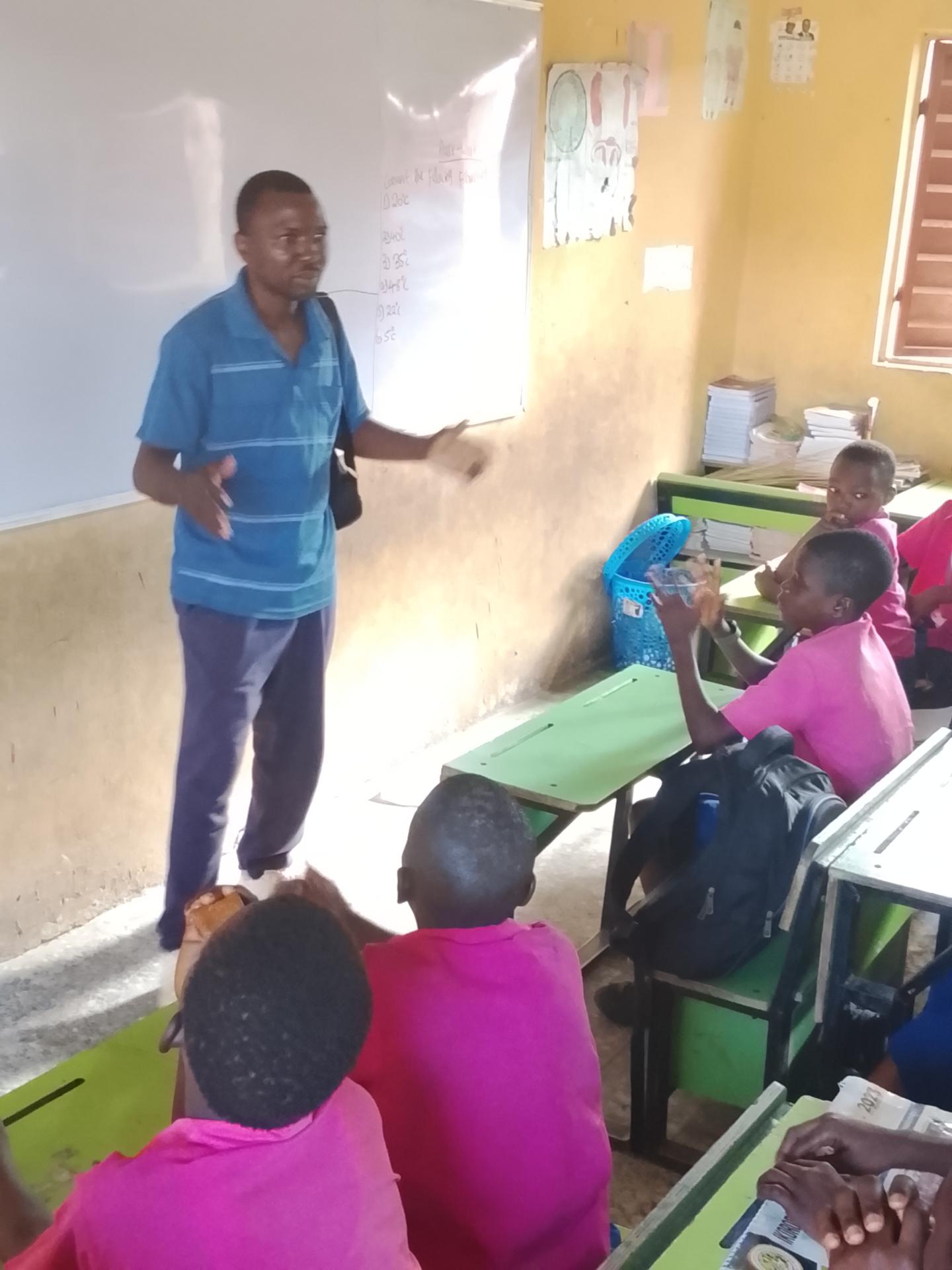
We engage members of the public by highlighting an issue and providing easy solutions. We deliver health and hygiene education sessions within schools promote images and information about our stations through social media volunteers deliver education and carry out monthly inspections. In addition, we partner with youth organisations such as the Leo Club and further community groups to attract additional volunteers. People are given specific responsibilities and therefore feel both that they are making a valuable contribution and are proud of their involvement. Going forward, we will be setting up a ‘Clean Hands Champions’ club. This will allow people to register and receive education on good hygiene. Members can then educate others in their local community. Seeing positive change motivates people to become involved.
How many people are on your team?
5
Impact: How has your project created impact / made a difference so far? Or, if at an early stage, what will impact look like?
To date we have reinstalled 2 handwashing points at shokunbi and Muslim mission primary school located in Lagos. Approximately 45 children access these daily. We have also trained 75 student hygiene captains. people have received training on the correct times and method for handwashing. A teacher commented that children are now less likely to be absent from school due to ill-health / children are now more likely to wash their hands prior to meals. Within the following 12 months we aim to provide 96 people with access to 5 additional handwashing points within 2 schools and markets. As the points are low cost to run, simple to use and self managed by the local community, we feel that this is a good approach. People are more likely to regularly wash their hands if it can be done easily. Consequently, people will become less ill. Children will then be in school more and families will save money on hospital costs.
Project Category
My project is an existing project that I started
Project Stage
Pilot-Stage (We’ve tried an activity or two)
Project Summary: Describe your project in one sentence
Clean Start Wash brings affordable, accessible hand washing and hygiene solutions to underserved communities, helping families stay healthy, children stay in school, and communities build a cleaner, safer future, one wash at a time
Project title
Clean start wash
The Problem: What problem are you helping to solve? Why does it matter to you and your community?
Many people in my Lagos community lack access to clean water and soap. Children often become unwell in my community suffering from illnesses such as diarrhoea and cholera. Children then cannot attend school and parents choose to pay for hospital costs, rather than for food or school. As someone who lives in my community I am aware of the effects that this has. People can easily and inexpensively maintain good hand hygiene where there is both water and soap. Healthy people allow children to learn more effectively and families also reduce expenditure. Overall, the community benefits.
Website URL(s) or social media handles.
What’s Next: What are the next steps you plan to take to grow or strengthen your project over the next year? If your project is still in the idea stage, describe the steps you will take over the next three months to launch or begin developing it.
We will develop our programme in 4 sections. We will install handwashing points at schools Lagos Furthermore, we will train additional student ‘hygiene leaders’ to manage these points. We will also work alongside NGOs to further support us and increase our coverage. Moreover, we will implement a basic tracking system to measure both the number of people using each handwashing point and the number of school days consequently saved. This will allow us to display our success and further develop our programme. Overall, we hope to benefit people and demonstrate that our approach can be replicated within other communities by the end of the year.
Your Innovation: What is different about your project compared to other programs or solutions already out there? How is your project new or innovative?
Unlike many handwashing initiatives which just deliver an information session and install a washing facility and then leave; Clean Start Wash remain on site to ensure that facilities are well maintained. Community members elect students and traders to be in charge of maintaining the station. People feel more responsible for the site as a result. Students are also taught how to be hygiene leaders. Children then pass on good hygiene behaviour to their families, as they imitate what they see in their peers. Furthermore, we inspect and carry out prompt maintenance. Usually, stations do not last long as there is no one to maintain them. So we include maintenance within our strategy. Lastly, we construct facilities from affordable local resources. As a result, not only is each station inexpensive to build, but it is also easily repairable. Therefore, we are able to install more stations in schools and markets. Although we have not created handwashing, we are transforming the practice. By installing an easy-to-use station, training students and encouraging community involvement, we are enabling good handwashing behaviour to become routine.
Your Solution: How are you solving this problem? Share your specific solution.
Clean Start Wash install hand-washing points at popular locations including schools, markets and local areas within Lagos. Points include a water container, tap, soap and waste outlet and are made using cheap and locally available resources. In addition, we educate people on the importance, and circumstances in which, they should wash their hands. Within schools, students are trained as hygiene leaders who then ensure that their peers maintain good hygiene practise and that the hand washing point is well looked after. Within markets, traders are involved in the maintenance of the hand washing points. We carry out monthly inspections of the hand washing points, restock soap and repair items. Each community appoints members to look after their hand washing point meaning that it continues to function effectively even after we have finished our involvement with them. This in turn means that individuals can conveniently maintain good hand hygiene on a regular basis. As a result, people become less ill. Children also attend school more regularly and families incur reduced expenditure on hospital costs.
Your team: What role(s) do your team members play? How do you share leadership with them?
There are 5 of us. I am Project Lead and oversee both our vision and strategy. Godson is Community Coordinator and liaises with schools and markets. Ngozi is our Technical Officer and looks after the stations including both construction and maintenance. Segun is responsible for our Hygiene Education, and also delivers training sessions for student captains. Samuel oversees our Records and Reporting. We meet weekly to discuss issues and make key decisions. Each person then specialises in their ar