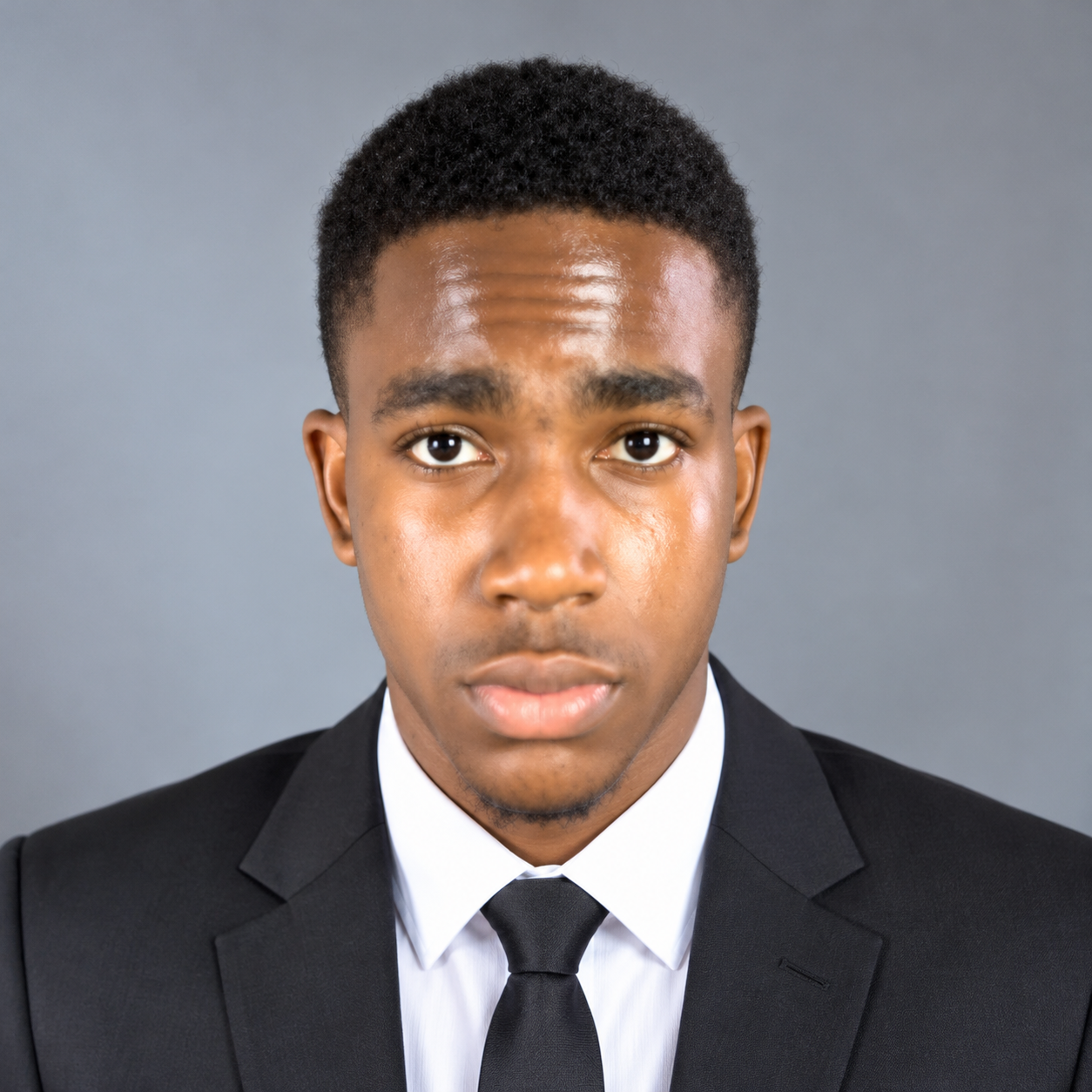
Country of Residence
Nigeria
Age
18
Project title
EcoVerse: From Ideas to Action
Project Summary: Describe your project in one sentence
EcoVerse is an emerging youth-led initiative in Nigeria that aims to help secondary school students move from learning about the Sustainable Development Goals (SDGs) to solving real community problems through accessible STEM education, teamwork, practical projects and youth-led action.
Website URL(s) or social media handles.
Project Category
My project is a brand new / emerging idea
Project Stage
Idea (We’re hoping to get started in the future)
Founding Story: What was the spark that led you to start your project? What was the "Aha!" moment that led you to get started and see the potential for this to succeed?
I know what it feels like to have an idea you really want to try but no money for materials, no one to guide you and nowhere to start. I've felt that frustration myself. When I became involved in climate awareness and youth education, I kept thinking about what happened after our conversations ended. We could explain pollution, climate change and other challenges, but what would help a student go home and actually do something about one of those problems? That was my turning point. I still believe in advocacy, but I realised I wanted to go further than raising awareness. I wanted young people to have the chance to learn, experiment and build something of their own. That thought became EcoVerse. I imagined secondary school students learning about the SDGs alongside basic STEM skills, choosing a problem they care about and working with friends to develop a practical response. I don't have all the resources yet, and EcoVerse is still at the planning stage. But I know why I want to build it: I want other young people to find the kind of guidance and opportunity I once needed.
The Problem: What problem are you helping to solve? Why does it matter to you and your community?
In Nigeria, there are young people with ideas about how to improve their schools and communities, but not everyone has access to the tools, mentors or practical learning opportunities to develop those ideas. I've experienced that gap myself. Students may learn about environmental problems or science in a classroom, yet rarely get a chance to ask, "What can we actually build or change?" For someone curious about electronics or designing a solution, even getting basic components and someone to explain how to use them can be difficult. This matters to me because I don't want a student's potential to depend on what their family can afford. And it matters to my community because problems like waste and poor access to practical learning won't be solved by awareness alone. I want to start in Nsukka and help make space for students to ask questions, try things, make mistakes and work together on local challenges. Their ideas deserve more than encouragement; they deserve a chance to be tested.
Your Solution: How are you solving this problem? Share your specific solution.
Our plan is to start EcoVerse with secondary school students in Nsukka, building the programme around problems they identify in their own schools and communities. We hope to begin with a one-week outreach and introductory programme. We'd listen to students, introduce the SDGs, discuss community challenges and help them choose issues that matter to them. This would lead into an eight-week STEM and SDG learning programme. Students would explore sustainability, basic science and electronics, teamwork, research and civic debate. We want to teach from the basics, use shared tools and affordable or reused materials, and bring in volunteer mentors so students without equipment can participate. After the eight weeks, our plan is to give student teams about a month to work on a prototype or community-action project. The result could be a simple device, a waste-management idea or another practical response to a problem the students have chosen. We'd encourage them to test it, listen to feedback and make improvements. If we secure enough support, we also hope to bring students together for a three-day showcase, debate and quiz. That event isn't confirmed yet. Our first priority is to run a manageable pilot, learn from it and build something we can sustain.
Impact: How has your project created impact / made a difference so far? Or, if at an early stage, what will impact look like?
EcoVerse is a new idea, and we haven't run its student programme yet. I don't want to present plans as achievements. Through my separate work in climate awareness and youth education, I've helped reach about 200 people. That experience showed me the value of engaging young people, but it also left me asking how many could turn what they learned into action. For an initial EcoVerse pilot, our goal is to work with one or two schools and, if resources allow, involve around 30–50 students. We want to know more than how many attend: how many students identify a community problem, complete an activity, work in a team and develop or test an idea? We'll collect feedback from students and teachers and document what teams create. Success for me would be seeing a student who once thought STEM was out of reach explain a solution they helped design, even if it's simple. Those numbers are targets for the future, not results we've already achieved.
Your Innovation: What is different about your project compared to other programs or solutions already out there? How is your project new or innovative?
I don't think EcoVerse needs to invent a completely new subject to be useful. What I want us to change is what happens after a young person hears about a problem. Some programmes focus on awareness. Others teach STEM skills or host competitions. Our idea is to connect those experiences: students identify a local challenge, understand the SDG behind it, learn the skills they need, work in teams and spend time trying a solution. Students would help choose the problems rather than receive a list of projects to copy. A project might involve a simple electronic device, but it could also be a practical community action. We'd value what students learn and test, not just how impressive a prototype looks. Accessibility matters too. We plan to start at beginner level, share tools, use affordable and reused materials where safe, and invite mentors to help students who have never built anything before. Teams would have about a month after the eight-week programme to improve their work instead of rushing to finish during a short workshop. If support allows, our hoped-for three-day showcase would give students a chance to explain and defend their ideas through demonstrations and debate. I want them to leave not just with information, but with confidence that they can act on it.
How many people are on your team?
8
Your team: What role(s) do your team members play? How do you share leadership with them?
We're eight young people building EcoVerse. As founder, I lead our vision and planning. We're proposing Anayo for operations, Chimmerir for SDGs, Chiagozie for STEM, God's Treasure for school outreach, God's Power for partnerships and funding, Destiny for communications, and Barine for education. We're still finalising these responsibilities. I believe leadership should be shared, so I want everyone to contribute ideas, participate in decisions and take ownership of their work.
What’s Next: What are the next steps you plan to take to grow or strengthen your project over the next year? If your project is still in the idea stage, describe the steps you will take over the next three months to launch or begin developing it.
Right now, our biggest challenge isn't a lack of ideas. It's finding the resources, support and opportunities to turn those ideas into something students can actually benefit from. Over the next three months, my team and I want to focus on building a strong foundation for EcoVerse. We'll finalise our responsibilities, approach secondary schools in Nsukka, listen to students and teachers, and find out what practical skills and opportunities students need most. We also plan to reach out to educators, STEM mentors, organisations and potential sponsors who may be willing to support us with knowledge, equipment or funding. Our goal is to begin with a one-week introductory programme, followed eventually by eight weeks of STEM and SDG education and an additional month for students to develop their projects, preferably during a long school vacation. We also hope to organise a three-day innovation showcase, debate and quiz where students can present their solutions, but this will depend on the support we receive. I know we cannot achieve everything at once. What matters to me is starting with what we have, learning from our mistakes and building something that can continue helping young people beyond our first programme.
How do you encourage other people to join your project or learn about the problem you’re working on? If you have a new idea, tell us how you will do this in the future.
One thing I've learned from working in climate advocacy and youth education is that people are more willing to get involved when they feel heard and understand how they can contribute. Through my previous advocacy and outreach activities, I've helped reach approximately 200 people. But I don't want EcoVerse to be another programme where we simply speak to young people and leave. I want them to become part of the solution. We're starting with eight team members who share the belief that young Nigerians deserve more opportunities to develop their ideas. Our plan is to visit secondary schools, engage teachers and student leaders, and use social media to introduce EcoVerse. We want students to tell us about the problems they face, the things they wish they could learn and the ideas they've been unable to pursue. We'll encourage them to form teams, participate in STEM and SDG activities, and eventually develop projects that respond to real challenges in their communities. Although EcoVerse hasn't started engaging students through its programmes yet, I hope our first participants will become people who encourage others to get involved. For me, the goal isn't just to bring young people together. It's to help them realise they have something valuable to contribute.