Country of Residence
Nigeria
Project title
EDU-RESCUE:Every Child Deserves a Chance to Learn
Project Summary: Describe your project in one sentence
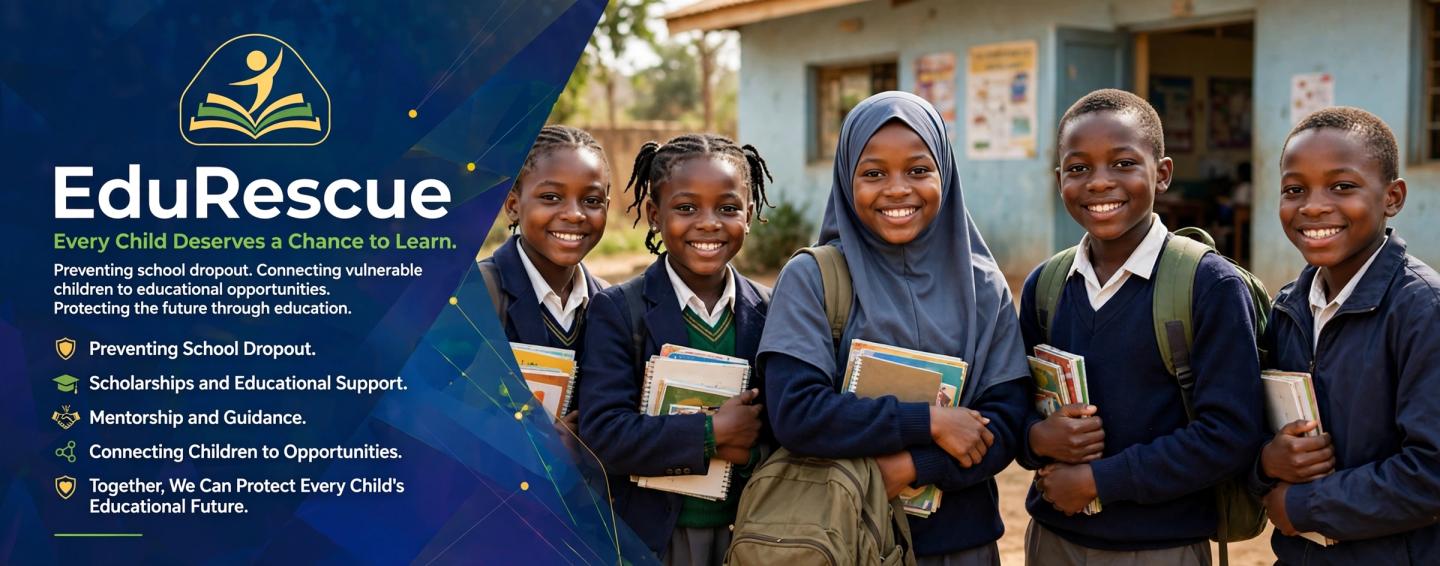
EduRescue is a technology-driven educational intervention dedicated to ensuring that no child loses the opportunity to learn because of poverty or difficult circumstances. By identifying children at risk of dropping out, connecting them with scholarship foundations, corporate sponsors, NGOs, mentors and educational resources, EduRescue seeks to prevent school dropout, support out-of-school children in returning to education and build a future where every child has a fair opportunity to learn.
Website URL(s) or social media handles.
Project Category
My project is a brand new / emerging idea
Project Stage
Idea (We’re hoping to get started in the future)
Founding Story: What was the spark that led you to start your project? What was the "Aha!" moment that led you to get started and see the potential for this to succeed?
My inspiration for EduRescue came during my travels to my school in Kano, where I became increasingly aware of the number of children and young people vulnerable to dropping out of school. I encountered the reality that many struggle to access or continue their education because of poverty, inadequate support and other challenges that could potentially be addressed. What troubled me even more was that many lacked access to quality, timely and relevant information about scholarships, educational assistance and opportunities that could help them remain in school. I began to realise that some children are not necessarily without opportunities; they are simply unable to access the information and support that could change their circumstances. This became a personal burden and sparked an important question in my mind: What if we could identify these children before they completely lose access to education and connect them with people and organisations willing to help? As someone passionate about creating social change, I felt compelled to explore a practical solution. That was how EduRescue began to take shape: an initiative that would connect vulnerable children with scholarship providers, NGOs, corporate sponsors, mentors and other educational support systems. I believe a child's financial circumstances should never be the final determinant of their educational future.
The Problem: What problem are you helping to solve? Why does it matter to you and your community?
Many children and young people in communities around Kano face the risk of dropping out of school because of poverty, inadequate educational support and limited access to opportunities. Beyond financial difficulties, many lack timely and reliable information about scholarships, sponsorships, educational assistance and other opportunities that could help them continue their education. Unfortunately, these opportunities often exist without reaching the children who need them most. As a result, promising young people risk losing their educational future because of challenges that could potentially be addressed. This problem became important to me during my travels to my school in Kano, where I became more conscious of the educational struggles facing vulnerable children. I began to question why a child's access to education should be determined by their financial circumstances or lack of information. I believe every child deserves an opportunity to learn, regardless of their background. Through EduRescue, I want to bridge the gap between vulnerable children and available educational support by connecting them with scholarship organisations, sponsors, NGOs, mentors and relevant opportunities. My ultimate concern is that a child's future should not be determined by poverty, geographical location or lack of information.
Your Solution: How are you solving this problem? Share your specific solution.
EduRescue aims to address this problem through a technology-driven platform that identifies children at risk of dropping out of school and connects them with the support they need. Through collaboration with schools, teachers, parents and community organisations, we will establish a referral system for identifying vulnerable learners, understanding their challenges and facilitating timely interventions before they completely lose access to education. A major component of EduRescue will be partnerships with scholarship foundations, NGOs, government agencies, corporate organisations, philanthropists and individuals willing to support education. The platform will provide access to verified scholarship opportunities, sponsorships, educational grants, school materials, financial assistance and mentorship. We also intend to connect children who have already dropped out with organisations and programmes that can support their return to formal or alternative learning. Beyond providing access to opportunities, EduRescue will incorporate a progress-monitoring system to track the support children receive and assess whether they remain in education. We will also engage parents, schools and relevant stakeholders to address the circumstances contributing to school dropout. Our goal is to move beyond simply providing information to creating a coordinated support network that gives vulnerable children a genuine opportunity to continue learning and build a better future. An important part of our approach will be ensuring that educational assistance reaches the right children transparently and responsibly. We intend to verify applications, assess individual needs, protect children's personal information and work with trusted partners to ensure that it makes a great difference
Impact: How has your project created impact / made a difference so far? Or, if at an early stage, what will impact look like?
EduRescue is currently at the idea-development stage, and we have not yet launched our pilot or recorded beneficiaries. However, the vision is to begin by identifying vulnerable children in selected communities in Kano and connecting them with available educational opportunities. Our initial target is to reach 50 children, facilitate access to scholarships and educational assistance, establish partnerships with at least five educational support organisations and recruit volunteer mentors to support beneficiaries. We hope to measure our impact through the number of children identified, scholarships and sponsorships secured, educational materials provided, children supported to return to school and beneficiaries who remain in education. Beyond these numbers, our greatest success will be preventing children from abandoning their educational dreams because of circumstances that can be addressed. In the long term, we envision expanding EduRescue across Nigeria, building a network where schools, organisations, sponsors and communities work together to protect every child's right to learn.
Your Innovation: What is different about your project compared to other programs or solutions already out there? How is your project new or innovative?
EduRescue is different because it goes beyond providing scholarships or distributing educational materials. While many organisations focus on offering specific forms of educational assistance, EduRescue seeks to create a coordinated system that identifies vulnerable children, understands the challenges threatening their education and connects them with the most appropriate support. Our approach focuses on early intervention rather than waiting until a child has completely dropped out. Another unique feature is our plan to bring scholarship foundations, NGOs, government agencies, corporate organisations, philanthropists, schools and individual sponsors together on one platform. This will make it easier for vulnerable children to discover available opportunities and for organisations and sponsors to reach verified beneficiaries. Through technology, we intend to simplify access to educational information and reduce the gap between available opportunities and those who need them. Most importantly, EduRescue will not end its intervention when a child receives assistance. We intend to monitor beneficiaries' educational progress, maintain relationships with partner organisations and identify additional support when necessary. By combining early identification, opportunity matching, mentorship, educational sponsorship and continuous monitoring, EduRescue aims to transform fragmented educational assistance into a more accessible and sustainable system for protecting children's educational future.
How many people are on your team?
12
Your team: What role(s) do your team members play? How do you share leadership with them?
EduRescue is driven by a team of 12 members who share a common commitment to improving access to education and preventing avoidable school dropouts. Our team works collaboratively to develop the initiative, coordinate its activities, identify potential partnerships and design practical ways of connecting vulnerable children with educational support. We intend to build on our collective strengths while assigning responsibilities across key areas, including technology, education, and engagement.
What’s Next: What are the next steps you plan to take to grow or strengthen your project over the next year? If your project is still in the idea stage, describe the steps you will take over the next three months to launch or begin developing it.
Over the next three months, our priority is to move EduRescue from the idea stage towards practical implementation. We plan to refine our operational framework, conduct preliminary community assessments in selected communities in Kano and identify children who are vulnerable to dropping out of school. We also intend to begin developing the digital platform, establish child-protection and beneficiary-verification procedures, and reach out to schools, scholarship foundations, NGOs and potential sponsors to explore partnerships. Our next goal is to launch a small pilot programme targeting at least 50 vulnerable children, connecting them with available scholarships, educational materials, financial assistance and mentorship opportunities. We will establish a system for monitoring beneficiaries and assessing whether the support they receive helps them remain in education. These initial steps will help us test our approach, learn from the communities we serve and build the partnerships and experience needed to expand EduRescue's impact beyond Kano.
How do you encourage other people to join your project or learn about the problem you’re working on? If you have a new idea, tell us how you will do this in the future.
Since EduRescue is still at the idea-development stage, our engagement efforts are focused on creating awareness and building interest in the problem of school dropout. We believe that education should be a shared responsibility, and we want to encourage individuals, parents, teachers, students and organisations to recognise the challenges vulnerable children face. So far, the idea has been developed around a shared commitment to addressing educational inequality, and we are working towards building a wider network of people who can contribute to the initiative. Going forward, we plan to use social media, community awareness campaigns, school visits and stakeholder engagements to educate people about the causes and consequences of school dropout. We will also invite volunteers to become mentors, encourage organisations to share scholarship opportunities and appeal to individuals and corporate sponsors to support vulnerable learners. Our aim is to turn awareness into meaningful action by giving people practical ways to contribute to keeping children in school.
