Country of Residence
Nigeria
Age
20
Project title
Empowering Deaf Women and Girls Through Inclusive Agriculture and Community Advocacy
Project Summary: Describe your project in one sentence
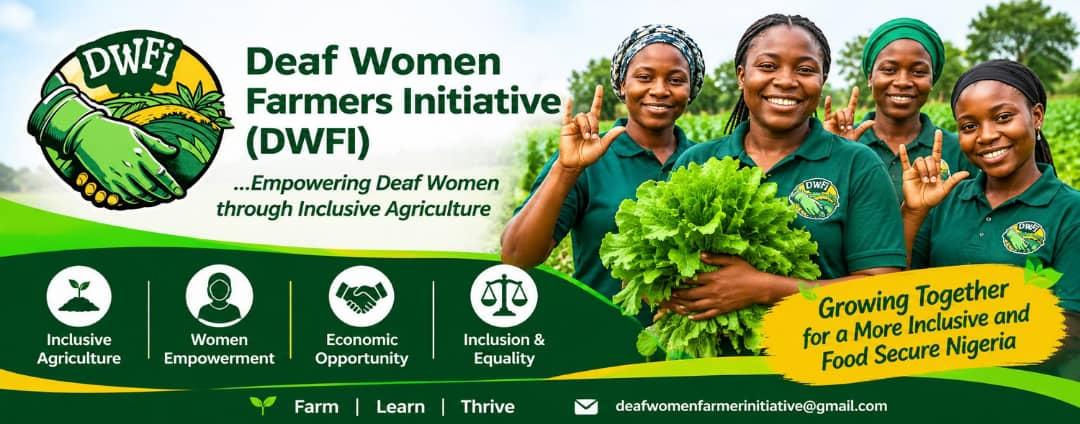
My project focuses on empowering Deaf women and girls through inclusive agriculture, skills development, and advocacy. Through the Deaf Women Farmers Initiative (DWFI), we aim to break barriers that limit the participation of Deaf women in agriculture and economic activities by creating access to training, resources, opportunities, and markets. Our goal is to promote financial independence, gender equality, disability inclusion, and sustainable livelihoods while ensuring Deaf women have a voice
Website URL(s) or social media handles.
Project Category
My project is a brand new / emerging idea
Project Stage
Pilot-Stage (We’ve tried an activity or two)
Founding Story: What was the spark that led you to start your project? What was the "Aha!" moment that led you to get started and see the potential for this to succeed?
My inspiration came from growing up in a Deaf family as a Child of Deaf Adults (CODA). Having Deaf parents, I experienced firsthand some of the communication barriers, exclusion, and limited opportunities that Deaf people face in society. Over time, I became particularly concerned about the challenges faced by Deaf women, who often experience discrimination because of both their gender and disability. The turning point was realising that many Deaf women have the ability and determination to contribute to agriculture and their communities but lack access to proper training, resources, markets, and equal opportunities. I began to see that disability should never be a barrier to economic independence or participation in society. This inspired me to support the vision of the Deaf Women Farmers Initiative (DWFI), founded by my mother, Veronica Uwakwe. Through DWFI, I became more involved in promoting inclusive agriculture and advocating for Deaf women and girls. I believe that when Deaf women are given the right opportunities, accessible information, and support, they can become economically independent, strengthen their communities, and contribute to food security. That belief is what continues to drive my commitment to this project.
The Problem: What problem are you helping to solve? Why does it matter to you and your community?
Deaf women in Nigeria face multiple barriers that limit their participation in agriculture, economic activities, and community development. Many lack access to inclusive agricultural training, accessible information, financial resources, modern farming opportunities, and markets where they can sell their produce. Communication barriers and discrimination often make these challenges even harder, leaving many economically dependent and excluded from opportunities that could improve their lives. This problem matters to me personally because I grew up in a Deaf family as a Child of Deaf Adults (CODA). I have witnessed how communication barriers and social exclusion affect Deaf people, especially women. I believe Deaf women should not be left behind simply because they communicate differently or have limited access to opportunities. Through the Deaf Women Farmers Initiative (DWFI), I want to contribute to changing this reality by promoting inclusive agriculture, skills development, economic empowerment, and equal participation. Empowering Deaf women benefits not only individuals but also their families, communities, and society. Everyone deserves the opportunity to contribute, earn a living, and live with dignity.
Your Solution: How are you solving this problem? Share your specific solution.
Through the Deaf Women Farmers Initiative (DWFI), we are promoting inclusive agriculture by connecting Deaf women with accessible agricultural training, farming skills, resources, and market opportunities. We also advocate for their rights and inclusion in economic activities. By working with partners, agricultural institutions, and volunteers, we aim to create opportunities for Deaf women to develop sustainable livelihoods, become financially independent, and contribute to food security in their communities.
Impact: How has your project created impact / made a difference so far? Or, if at an early stage, what will impact look like?
DWFI is still growing, but we have begun building a community of Deaf women interested in agriculture and empowerment. We have registered Deaf women members and started showcasing their agricultural activities, including potato harvesting. Our goal is to reach more Deaf women and girls through accessible training, farming opportunities, partnerships, and advocacy. We hope to help women gain practical skills, increase their income, achieve financial independence, and become active contributors to food security and community development.
Your Innovation: What is different about your project compared to other programs or solutions already out there? How is your project new or innovative?
DWFI is unique because it combines disability inclusion, gender equality, and agriculture by placing Deaf women at the centre of the solution. Unlike many agricultural programmes that overlook communication barriers, we promote accessible training through sign language interpretation and create opportunities specifically for Deaf women. Our approach goes beyond farming by addressing economic empowerment, participation, and equal opportunities. We believe Deaf women should not just benefit from development programmes but should also lead and actively shape them.
How many people are on your team?
3
Your team: What role(s) do your team members play? How do you share leadership with them?
Our team is led by DWFI Founder and Executive Director, Veronica Uwakwe, with support from volunteers and individuals passionate about Deaf inclusion, agriculture, and women's empowerment. I contribute as a Program Communications Assistant, supporting communication, advocacy, and coordination. We are also building a wider volunteer network and seeking agricultural experts, sign language interpreters, trainers, and partners to strengthen our work and reach more Deaf women.
What’s Next: What are the next steps you plan to take to grow or strengthen your project over the next year? If your project is still in the idea stage, describe the steps you will take over the next three months to launch or begin developing it.
Over the next year, we plan to expand our network of Deaf women farmers, organise accessible agricultural training, provide farming resources, and connect members to markets and financial opportunities. We also aim to strengthen partnerships with agricultural institutions, NGOs, and development organisations, recruit more volunteers, and improve our outreach. Our long-term goal is to establish a training centre where Deaf women can develop practical skills, become financially independent, and build sustainable livelihoods.
How do you encourage other people to join your project or learn about the problem you’re working on? If you have a new idea, tell us how you will do this in the future.
We encourage others to join through social media, community outreach, personal engagement, and partnerships with organisations that support women and persons with disabilities. We also share stories and activities of Deaf women farmers to raise awareness about their abilities and challenges. Through our growing volunteer community, we welcome people who want to contribute their skills and time. So far, we have engaged Deaf women members and volunteers, and we aim to reach more young people, agricultural experts, and partners to support our mission.