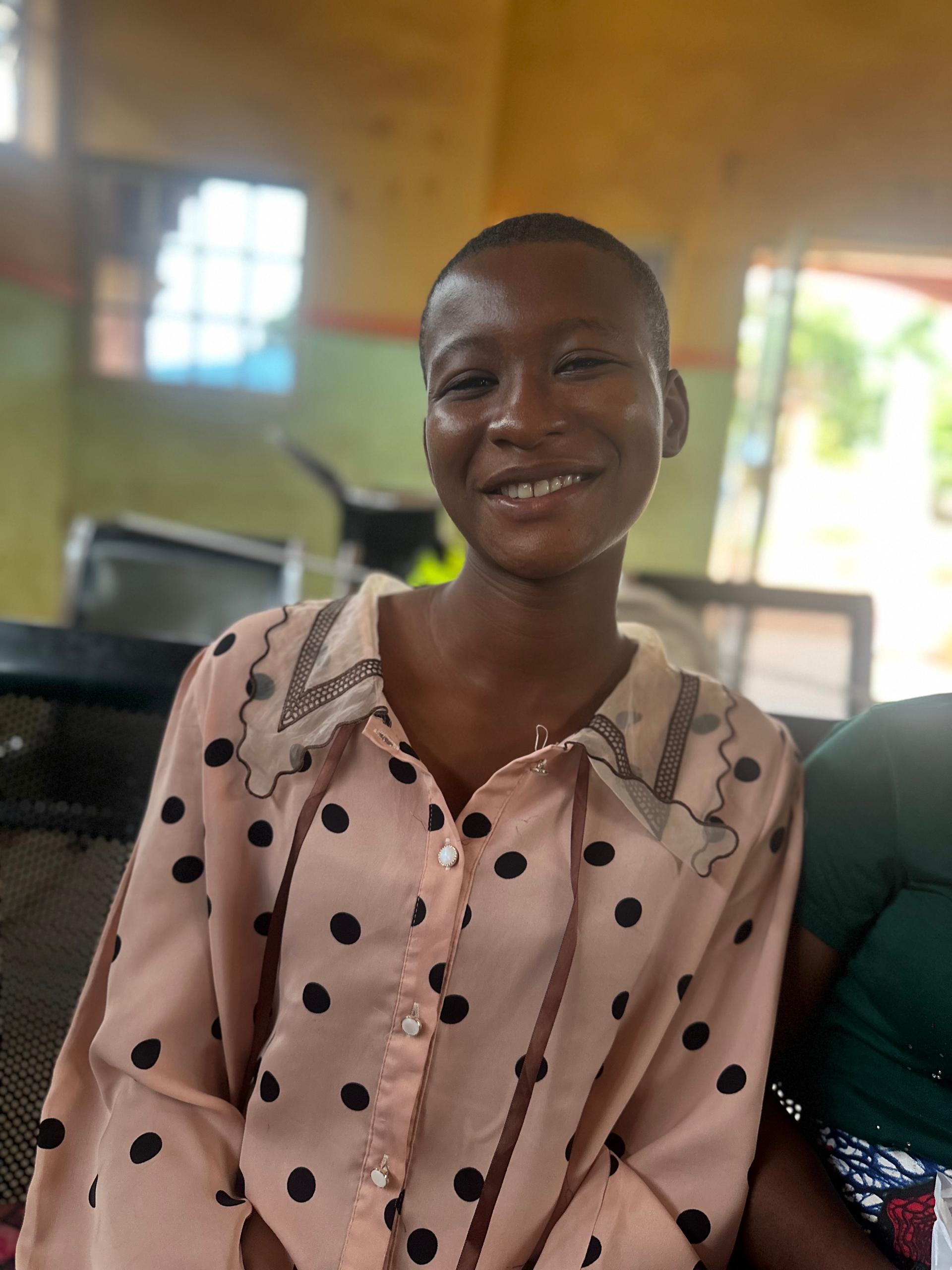
Age
16
Country of Residence
Nigeria
Founding Story: What was the spark that led you to start your project? What was the "Aha!" moment that led you to get started and see the potential for this to succeed?
I was in JSS1 when I watched my friend Angela, who was a very bright girl, become pregnant and then be forced to marry an older man. I could not understand how a girl who had so much potential could suddenly lose the opportunity to continue her education and pursue her dreams. That experience stayed with me. I began to realize that Angela was not the only girl at risk. In my community, girls face different pressures that can make it difficult to stay in school, including child marriage, pregnancy, hawking and heavy responsibilities at home. My “aha” moment came when I realized that girls should not wait until they drop out of school before someone speaks up for them. We can support one another, encourage ourselves to remain in school and help each other find the confidence to speak about the challenges they face. This is what inspired me to start the Village Girl Champion Club. I want girls to know that their education matters, their voices matter and their future should not be decided for them.
How do you encourage other people to join your project or learn about the problem you’re working on? If you have a new idea, tell us how you will do this in the future.
I use storytelling, conversations with other girls and social media to encourage people to learn about our work. I also teach other girls about the issues we are addressing and invite them to participate in our activities. I use WhatsApp status to share pictures and videos from our study circles and activities so that other girls can see what we are doing and feel encouraged to join. One thing that is important to me is that I do not want girls to feel that they are being invited into the project because they are poor or because people feel sorry for them. I want joining the Village Girl Champion Club to feel exciting, meaningful and empowering. We show girls that the club is a place where they can make friends, learn, study together, discover their voices and contribute ideas. Girls who are already members can also invite their friends and share their experiences. As the project grows, I want our girl champions to become the people who encourage other girls to join. This will help the project grow through girls themselves rather than depending only on adults to mobilize participants.
How many people are on your team?
5
Impact: How has your project created impact / made a difference so far? Or, if at an early stage, what will impact look like?
One of the biggest impacts of this project is what it has changed in me. I have grown from a shy girl into someone who can speak up, organize other girls and lead conversations about issues affecting our community. The girls in our club have also started seeing themselves differently. They have a space where they can talk about their challenges, encourage one another and think about their education and future. Some girls have become more determined to remain in school, and conversations with parents have also challenged some of the attitudes around girls and early marriage. At this stage, our project is still growing, so I do not want to claim an impact we have not yet achieved. Over the next year, I want to grow the club, reach more girls and create more opportunities for girls to support one another academically and personally. I will measure our progress by the number of girls who join and participate, the number of study and support activities we organize, the parents and community members we engage, and the changes girls report in their confidence and ability to remain in school.
Project Category
My project is an existing project that I started
Project Stage
Pilot-Stage (We’ve tried an activity or two)
Project Summary: Describe your project in one sentence
Keep Her in School Initiative is a girl-led project that supports girls in my community to remain in school by building their confidence, creating peer study and support groups, engaging parents, and speaking up against practices such as child marriage and school-day hawking that interrupt girls’ education.
Project title
Keep her in school national initiative
The Problem: What problem are you helping to solve? Why does it matter to you and your community?
The problem I am trying to solve is girls dropping out of school because of pressures around them, including child marriage, teenage pregnancy, hawking and unequal responsibilities at home. This matters to me because I am a girl from this community, and every girl who drops out could be me. I know that girls have dreams and abilities, but sometimes their circumstances make it difficult for them to continue their education. A girl may spend her school days hawking, return home to cook, fetch water, clean and care for others, and still be expected to perform like a student who has enough time to study and rest. When girls leave school, the loss is not only theirs. Families and communities also lose young women who could become professionals, leaders, entrepreneurs and people who contribute to solving problems in their communities. I believe girls should have the opportunity to remain in school, develop their abilities and decide what they want their futures to look like. This is why I want to work with girls, parents and community members to create an environment where girls are supported to stay in school.
Website URL(s) or social media handles.
What’s Next: What are the next steps you plan to take to grow or strengthen your project over the next year? If your project is still in the idea stage, describe the steps you will take over the next three months to launch or begin developing it.
Over the next year, I want to strengthen the Village Girl Champion Club and make it a stronger support system for girls in my community. First, I want to grow our team from 5 members to about 20 young people who can help organize activities and reach more girls. We will also expand the club to two or three additional communities. We will organize regular girls' meetings, peer study circles and conversations with parents and community members. We will listen to girls and document the barriers that make it difficult for them to remain in school, including early marriage, school-day hawking and unequal responsibilities at home. Based on what we learn, we will develop simple recommendations and share them with community leaders and local decision-makers. I also hope to work with schools and community partners to explore practical support such as after-school study spaces where girls can learn safely. My long-term goal is to build a strong group of girl champions who can continue speaking up for girls' education and eventually engage local government leaders to support policies and community actions that help girls stay in school.
Your Innovation: What is different about your project compared to other programs or solutions already out there? How is your project new or innovative?
My project is not an idea I picked from a textbook. It comes from the real pain I see in my village and from experiences that girls around me are facing. What makes my approach different is that I am putting girls at the centre of the solution. Instead of adults speaking about girls and deciding what girls need, the Village Girl Champion Club gives girls a space to identify the problems affecting their education, support one another and speak about the changes they want to see. The club also connects different parts of the problem. We do not only tell girls to “stay in school.” We want to understand what makes staying in school difficult and work with girls, parents and community members to address those barriers. For example, girls can create peer study circles, support girls who are struggling, discuss early marriage and other pressures, and share their experiences with parents and community leaders. As we learn more about the problems girls face, we can develop recommendations and take them to people who have the power to make changes. My belief is simple: girls should not only be protected by decisions made for them. They should also have a voice in the decisions that affect their lives.
Your Solution: How are you solving this problem? Share your specific solution.
I started the Village Girl Champion Club as a safe space where girls can support one another, learn about their rights and education, build confidence and speak about the challenges affecting their schooling. Through the club, we organize peer to peer sessions and study groups where we encourage one another to remain in school and help each other with studies. We also discuss issues such as child marriage, teenage pregnancy, school-day hawking, unequal responsibilities at home and other barriers that affect girls’ education. We also carry out advocacy visits to stakeholders in my commuiity on issues affecting girls. The girls will be encouraged to identify problems in their own communities and think about solutions. We will also engage parents and other community members through conversations led by the girls, so that families can better understand how the way girls are treated at home can affect their education. As the club grows, we will document the challenges girls are facing and use what we learn to engage community and local government leaders. Our goal is to ensure that girls are not only protected but are also part of conversations and decisions about their education. The project is girl-led. I will lead the initiative, but other girls will have responsibilities in organizing activities, supporting members, sharing their experiences and speaking to their communities. I want the girls in the club to become champions who can support other girls to stay in school.
Your team: What role(s) do your team members play? How do you share leadership with them?
Our team has five members. I am the team lead and coordinate the project. My vice lead supports me and takes responsibility when I am unavailable. Our organizer helps plan meetings and activities, while other team members support communication, mobilization and activities with the girls. We also have a senior mentor who guides and oversees our work. We make decisions together, and everyone's opinion is respected.