Country of Residence
Nigeria
Age
18
Project title
KNOW YOUR GENOTYPE
Project Summary: Describe your project in one sentence
Know Your Genotype is a youth-led Sickle Cell Disease (SCD) awareness and free genotype testing project for secondary school students in Bagwai Local Government Area, Kano State. It was run by Team One Health under the Youth Day of Service (YDoS) 2026 programme, supported by Leap Africa, from 5 to 19 November 2026. It contributes to SDG 3, Good Health and Well-being. I provide awareness for 500 students, free genotype test 300 studeents, and 3 created sickle cell awareness clubs in 3 schools.
Website URL(s) or social media handles.
www.linkedin.com/in/abubakar-shuaibu-sani-8a5914310
Project Category
My project is an existing project that I started
Project Stage
Pilot-Stage (We’ve tried an activity or two)
Founding Story: What was the spark that led you to start your project? What was the "Aha!" moment that led you to get started and see the potential for this to succeed?
After our first team was eliminated at the pitching stage of a national leadership programme, I could have stopped. But the community I wanted to serve had not gone anywhere. I am a Medical Laboratory Science student from Bagwai, and in the lab I see how simple a genotype test is: one small blood sample and a clear result. Yet around me, students were finishing secondary school without ever knowing their genotype, and a quiet silence surrounded the subject of Sickle Cell Disease. That was my spark. I realised the gap was not science or even cost, but awareness, access and the courage to talk about it. I looked for another way to act, found the Youth Day of Service programme, and built Know Your Genotype around one idea: put knowledge and a free test in the hands of young people before they make life decisions. I believed it could succeed because the need was real, the schools were within reach, and I knew I could bring together young volunteers and health professionals to deliver it.
The Problem: What problem are you helping to solve? Why does it matter to you and your community?
Sickle Cell Disease is one of the biggest health burdens in Nigeria, which has the highest number of cases in the world, and about one in four Nigerians carries the sickle cell trait. The disease is inherited, so it can be prevented from being passed on when people know their genotype early and make informed choices. In Bagwai, many secondary school students have never been tested. Testing is not always easy to reach, awareness is low, and there is stigma and silence around the subject, so young people often learn their genotype late, after major relationship decisions have already been made. This matters to me for two reasons. As a Medical Laboratory Science student, I know a simple blood test can give a clear answer. As a son of Bagwai, I know these students, their schools and their families. Students and teachers told us projects like this are what the community needs to change long-held beliefs and remove the stigma. Solving this means giving the next generation knowledge and choices that earlier generations often did not have.
Your Solution: How are you solving this problem? Share your specific solution.
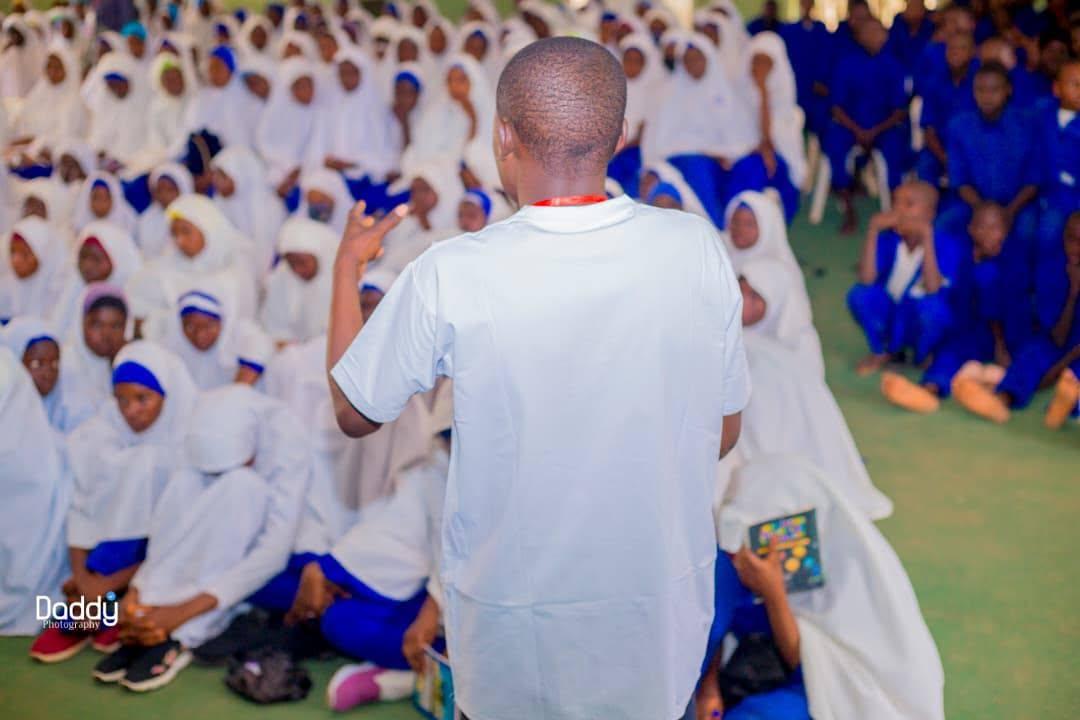
Know Your Genotype brings free Sickle Cell awareness and genotype testing directly to secondary school students. First, we secured approval from the Kano State Senior Secondary Schools Management Board, its Dawakin Tofa zonal office and the Bagwai LG Education Secretary. We recruited and trained 9 youth volunteers and 10 health personnel, including a phlebotomy refresher led by a senior laboratory technician. Parents and guardians received consent forms, and no student was tested without one. Students from four schools took a short anonymous pre-test, then attended an awareness day where volunteers and two senior laboratory technicians led sessions on what Sickle Cell Disease is, how genotypes are inherited, how testing works and why knowing early matters. We used demonstrations, a quiz and an anonymous question box, and students took a post-test at the end. Each student had a school-code ID, for example GTC-014, that linked their forms and sample while keeping results private. Qualified health personnel collected samples for free testing, in partnership with Arifullah Medical Diagnostic Services Bagwai. Every student who attended took home a flyer, and we formed Sickle Cell Awareness Clubs in three schools so student leaders keep the conversation going after the project ends.
Impact: How has your project created impact / made a difference so far? Or, if at an early stage, what will impact look like?
Between 5 and 19 November 2026, Know Your Genotype reached 420 secondary school students from four schools in Bagwai, and 309 of them took a free genotype test with parental consent. We tested knowledge before and after the awareness day: the average score rose from 2.0 to 4.8 out of 6, from 33% to 80%, an increase of 140%. Nineteen people delivered the project, 9 youth volunteers and 10 health personnel, and three schools now have Sickle Cell Awareness Clubs with student leaders, so the learning continues. Students and teachers told us projects like this are what the community needs to change old beliefs about Sickle Cell Disease and remove the stigma. For me, a clear sign was the open question session, where students asked about a subject people rarely discuss. We expect the biggest impact to come next, as students share what they learned with their families, as club members teach their peers, and as more young people choose to know their genotype before they make life decisions.
Your Innovation: What is different about your project compared to other programs or solutions already out there? How is your project new or innovative?
Awareness drives on Sickle Cell Disease often stop at a talk, and testing drives often skip the education that gives a result meaning. Know Your Genotype joins the two, adds measurement, and builds something that stays in the school. First, we measured learning, not just attendance: an anonymous pre-test and post-test, in English and Hausa, linked by school-code IDs that never carried a student's name. This let us show a rise in average score from 2.0 to 4.8 out of 6 while protecting privacy. Second, we paired young volunteers with health professionals. Youth volunteers and senior laboratory technicians led the sessions, and qualified personnel handled sample collection, so the project felt close to students but stayed medically safe. Third, we used interactive tools instead of lectures: demonstrations of how genotypes are inherited, a quiz and an anonymous question box so students could ask what they were afraid to ask aloud. Fourth, we built peer education clubs in three schools so student leaders carry the message after we leave. Finally, we worked as a local partnership with schools, education offices and a diagnostic facility, using existing resources in a new way for students.
How many people are on your team?
19
Your team: What role(s) do your team members play? How do you share leadership with them?
Team of 19: me as project lead, 9 youth volunteers and 10 health personnel. I coordinate planning, schools and approvals. Youth volunteers handled registration, consent checks and crowd flow, and led sessions. Health personnel collected samples, and two senior laboratory technicians led sessions. I share leadership by giving each person ownership of a task, meeting before the event, and trusting volunteers to speak and decide in their area.
What’s Next: What are the next steps you plan to take to grow or strengthen your project over the next year? If your project is still in the idea stage, describe the steps you will take over the next three months to launch or begin developing it.
Over the next year we plan to: (1) Reach the school that missed our awareness day, GSS Bagwai, and extend awareness and testing to more schools in Bagwai and nearby areas. (2) Strengthen the three Sickle Cell Awareness Clubs with training, simple materials and regular peer-led activities, and start clubs in more schools. (3) Use stories, drama and posters in Hausa to start conversations about Sickle Cell Disease with families and neighbours, not only students. (4) Follow up with students and teachers to see how much knowledge they retain and what has changed in their families' decisions. (5) Build on our partnership with Arifullah Medical Diagnostic Services Bagwai and explore ways to keep genotype testing available to young people. (6) Share our report and results with the education offices that supported us and with health partners, so the model can be copied in other local government areas. (7) Seek further funding and partners to cover testing supplies, training and materials. Our aim is to turn a one-time project into a standing community effort.
How do you encourage other people to join your project or learn about the problem you’re working on? If you have a new idea, tell us how you will do this in the future.
We bring people in by giving them a clear role and making the cause personal. For Know Your Genotype, we opened a volunteer sign-up form, held a kickoff meeting and trained everyone on Sickle Cell basics before they spoke to students. In the end, 9 youth volunteers and 10 health personnel took part. Several volunteers led sessions or gave the closing remarks, so they became owners of the project, not helpers. We engaged school principals, teachers and three education offices from the start, and parents through consent forms that brought the conversation into homes. Students who attended, 420 in total, each received a flyer to share with family, and we used the hashtag #KnowYourGenotype on social media. Three schools now have awareness clubs where students continue to teach their peers. In future we will keep inviting youth through school clubs and social media, give volunteers certificates and clear roles, and recognise their work publicly so more people want to join.