Age
15
Country of Residence
Nigeria
Founding Story: What was the spark that led you to start your project? What was the "Aha!" moment that led you to get started and see the potential for this to succeed?
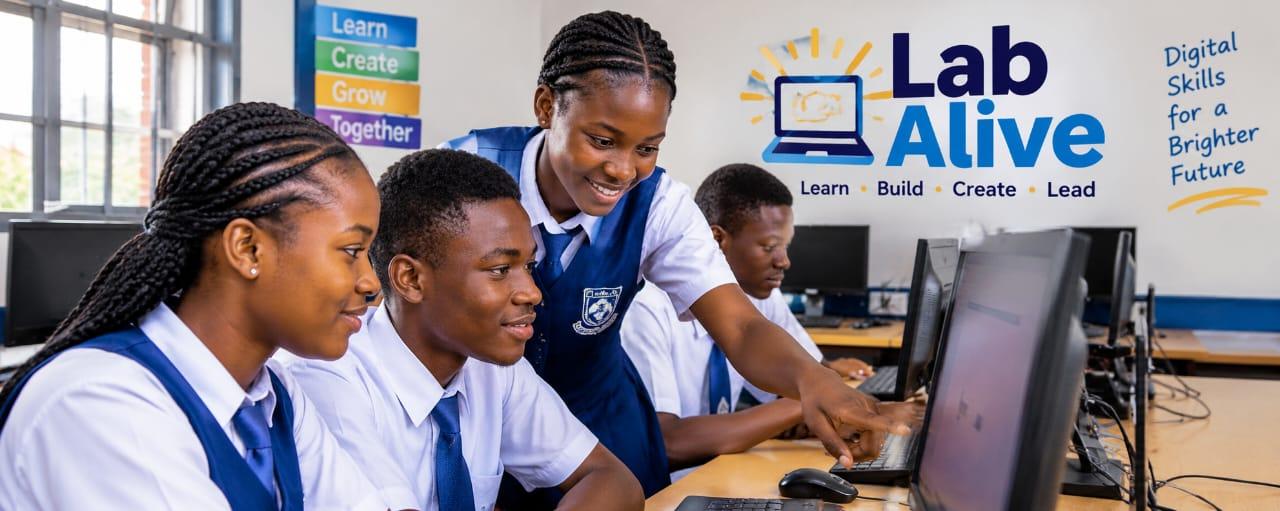
At our school, we noticed something that made us think differently about digital learning: we had an ICT laboratory with computers, yet many students were not using it. We began to see that having computers available was not the same as making digital learning accessible. Some students did not know they were permitted to use the laboratory, some lacked the confidence to operate a computer, and others did not know what they could do with one. This made us ask an important question: what if students could help solve this problem for one another? That question inspired Lab Alive, a student-led initiative developed by members of the FutureThinkers Club at Agbowa Community Senior Grammar School. Instead of waiting for new equipment or a complicated solution, we decided to build on what our school already had. We designed a programme that would help students discover the laboratory, learn basic computer skills, and take their first steps into coding through Scratch. We also wanted students to do more than receive training. By taking responsibility for awareness campaigns, workshops, and peer support, we could help other learners while developing our own leadership and teaching skills. Lab Alive grew from the belief that opportunities become meaningful when people can access them and know how to use them. We want our ICT laboratory to become a place where students feel confident
How do you encourage other people to join your project or learn about the problem you’re working on? If you have a new idea, tell us how you will do this in the future.
We believe that students can be powerful agents of change when they are given the opportunity to help solve problems in their own school. Through Lab Alive, our student campaign team will visit classrooms, display posters, make morning announcements, and personally invite classmates to participate in the digital skills workshops. These activities will help students understand that the ICT laboratory is available to them and that they do not need prior computer experience to begin learning. Members of the FutureThinkers Club will also encourage participants during the workshops, help them practise new skills, and support them as they explore Scratch. By learning alongside their peers, students can ask questions more freely and encourage one another to keep trying. We want participants to share their experiences and demonstrate what they create, helping other students see the possibilities of using technology. A student who creates a simple game or animation can inspire a classmate who has never tried coding to give it a chance. Our initial targets are to engage at least 40 students in basic digital skills workshops and help at least 20 create beginner Scratch projects, supported by a core group of 15 student facilitators. Through classroom outreach, peer learning, and a student project showcase, we hope to make the laboratory more visible and encourage wider participation.
How many people are on your team?
15
Impact: How has your project created impact / made a difference so far? Or, if at an early stage, what will impact look like?
Lab Alive aims to change how students access and use the ICT laboratory at our school. Rather than allowing the computers to remain underused, we want to help our classmates gain the confidence and practical skills to use them for learning and creativity. Our target for the initial implementation is to help at least 40 students who have never used the ICT laboratory complete basic digital skills workshops. We also aim for at least 20 students to create beginner Scratch projects. In addition, we plan to develop a core group of 15 student facilitators who will gain practical experience in teaching, teamwork, coordination, and leadership. We will track progress through workshop attendance, before-and-after verbal confidence checks, project documentation, and the Scratch projects students create. We also want to observe whether participation in the ICT laboratory increases during and after the programme. Our intended impact goes beyond the number of students trained. We want more students to feel that technology is accessible to them and that they can use it to explore ideas, solve problems, and create digital projects. By leaving reusable session plans with the school and developing students who can support future learners, we aim to create a model that can continue beyond the initial programme.
Project Category
My project is a brand new / emerging idea
Project Stage
Pilot-Stage (We’ve tried an activity or two)
Project Summary: Describe your project in one sentence
Lab Alive is a student-led digital skills programme that transforms an underused school ICT laboratory into a space for learning, creativity, and peer leadership. Through awareness campaigns, hands-on computer training, and beginner coding with Scratch, students move from having little or no computer experience to creating their own digital projects. The programme equips students to learn from one another and prepares student facilitators to sustain the initiative.
Project title
Lab Alive
The Problem: What problem are you helping to solve? Why does it matter to you and your community?
At Agbowa Community Senior Grammar School in Agbowa, Lagos State, our school has a functioning ICT laboratory, but many students are not making use of it. We recognised that the challenge was not simply whether computers existed, but whether students knew how to access and use them. Our team identified three main barriers. First, some students do not know that they have permission to use the laboratory or when it is available. Second, students with little hands-on computer experience may feel intimidated by basic tasks such as turning on a computer, navigating programmes, and typing. Third, some students do not understand what they can achieve with technology, leaving them without a clear reason to use the laboratory. These barriers matter because digital skills are increasingly important for education, employment, communication, and everyday life. Students who leave school without basic computer confidence may find it harder to take advantage of opportunities that require digital knowledge. We believe that students should not miss out on these opportunities simply because they have not been introduced to the technology already available in their school. The underused laboratory represents both a challenge and an opportunity. We want to help our classmates overcome the barriers preventing them from using it and turn an existing school resource into a more active space
Website URL(s) or social media handles.
What’s Next: What are the next steps you plan to take to grow or strengthen your project over the next year? If your project is still in the idea stage, describe the steps you will take over the next three months to launch or begin developing it.
Over the next year, we want to complete the initial programme, learn from the experience, and establish a structure that allows Lab Alive to continue. Our first priority is to implement the three phases: awareness and mobilisation, basic digital skills workshops, and introductory Scratch sessions. We will document attendance, assess changes in participants' confidence, and collect examples of their digital projects to understand what they have learned and where additional support is needed. We also plan to organise a student project showcase where participants can demonstrate their work and encourage other students to explore the ICT laboratory. Our team will compile the lessons learned, attendance records, and project evidence into a report that can guide future implementation. To strengthen sustainability, we want student facilitators to support future participants using the session plans retained by the school. This will help new cohorts learn from students who have already gained experience through the programme. As the initiative develops, we hope to explore additional topics such as internet safety, Microsoft Word, and digital creativity. We would also like to share our experience with other schools that have ICT facilities but face similar challenges in getting students to use them. Our long-term goal is to make Lab Alive a repeatable, student-led approach to digita
Your Innovation: What is different about your project compared to other programs or solutions already out there? How is your project new or innovative?
Lab Alive approaches digital inclusion by asking a different question: how can students make better use of technology their school already has? Our school has a functioning ICT laboratory, but its availability has not guaranteed that students use it. We recognised that awareness, basic skills, and a clear purpose for using the computers were all necessary. Our solution brings these three elements together in one programme. First, Lab Alive is peer-led. Students are not just participants receiving instruction; they take responsibility for mobilising classmates, facilitating workshops, supporting learners, and documenting activities. This allows them to contribute directly to solving a problem in their school while developing their own leadership skills. Second, the programme moves beyond basic computer operation. After learning how to navigate a computer and type, participants are introduced to Scratch and encouraged to create a game, story, or animation. This gives them an opportunity to move from using technology to creating with it. Third, Lab Alive is designed for continuity. Student facilitators can support future learners, while reusable session plans remain with the school. The approach reduces dependence on an external trainer and gives students a role in sustaining the programme. The initiative uses existing school computers, free beginner-friendly software, structured learning activities, and student leadership rather than relying on expensive new equipment. Our innovation is in combining digital access, practical learning, creativity, and peer leadership to address the barriers that keep students from using an existing resource. We hope this approach can be adapted by other schools facing similar challenges.
Your Solution: How are you solving this problem? Share your specific solution.
Lab Alive is a three-phase, student-led digital skills programme designed to make our school's ICT laboratory more accessible and useful to students. Members of the FutureThinkers Club will lead the activities, supported by the wider student team and guided by our Teach For Nigeria Fellow. Phase 1: Awareness and mobilisation. Our campaign team will visit classrooms, display posters, make morning announcements, and invite students to participate. This will help students understand that the ICT laboratory is available for their learning and explain how they can take part. Phase 2: Basic digital skills. Student facilitators will organise small-group workshops covering how to turn on and navigate a computer, develop basic typing skills, handle equipment responsibly, and practise digital etiquette and safe online behaviour. Facilitators will work with groups of approximately 5–8 students, with supporting team members present. Phase 3: Introduction to coding. Students who develop basic computer confidence will progress to Scratch, a beginner-friendly visual programming platform. They will create simple interactive projects, such as games, stories, or animations, allowing them to apply their skills creatively. The programme takes students from discovering an available resource to using technology and creating something of their own. We will document participation through attendance records, use before-and-after verbal confidence checks, maintain a project diary, and collect examples of students' Scratch projects. Lab Alive is designed to continue beyond the initial implementation. Student facilitators will develop the skills to support future participants, and reusable session plans will remain with the school.
Your team: What role(s) do your team members play? How do you share leadership with them?
Our team consists of student leaders and members of the FutureThinkers Club. The project lead coordinates activities and reporting; the documentation lead maintains attendance records, photographs, and project documentation; the campaign lead organises awareness activities; and student facilitators lead digital skills and Scratch sessions. Other club members support outreach and peer encouragement. Our Teach For Nigeria Fellow provides guidance and supervision.
