My initiative is designed for and delivered in London
Yes
I am 18 years of age or above, by the application deadline.
Yes
My organisation is a registered UK entity and has a London-based address.
Yes
My organisation is a non-profit (e.g. school, university, or local authority) — not a for-profit, which can only join as a partner.
Yes
If there is a for-profit organisation as a partner in my initiative, they work on a cost-recovery basis only.
Yes
My solution is implemented at scale, or if not, I have a clear business plan, a minimum viable solution (prototype, pilot, or proof of concept), and evidence of work or impact in London within your coalition.
Yes
I am aware that, if I am submitting more than one application to a Challenge run by Ashoka and Go! London, only one of them is able to progress through the stages.
Yes
Are you an employee (and their children and grandchildren) of Ashoka or any of its respective affiliates and participating advertising and promotion agencies?
No
I have read and accepted the Challenge Terms & Conditions
1
First Name
Last Name
Pronouns
I would like to receive notifications and updates about Go London!, Ashoka, Ashoka Changemakers, and other Ashoka opportunities.
Are you an Ashoka Fellow?
Are you applying from an organization founded by an Ashoka Fellow?
If you are applying from an organization founded by an Ashoka Fellow, please specify the name and organisation of the fellow below.
Initiative Title
Movement for Change: Youth-Led Climate Action Through Physical Activity and Volunteering
Lead Organization Name
The Good Gym
My initiative is designed for and delivered in London
1
Year that you started/ registered your organisation
2009
Website URL(s) or Social Media Handles
www.goodgym.org, www.instagram.com/goodgym, www.facebook.com/gooodgym, www.linkedin.com/company/goodgym
Initiative Stage
Established (You’ve successfully passed early phases and have a plan for the future. Your venture has been in existence for 6 years and above)
Sectors/Themes: What topic does your project most directly relate to?
Environment & Sustainability
Initiative Summary: Describe your initiative in one sentence
Movement for Change mobilises young Londoners (18-25) to take sustained climate action by combining their workouts - running, walking and cycling - with environmental volunteering, supporting activities that restore green and blue spaces and support biodiversity.
Challenge Focus: What topic does your initiative most directly relate to?
Climate action through awareness and engagement
The Problem: What problem are you helping to solve and who will benefit the most from your solution? How close are you to the problem and/or community impacted?
The problem we are helping to solve is the lack of accessible, flexible and locally rooted opportunities for young adults to take part in environmental action through sport and physical activity Across London, environmental opportunities that are youth-led and embedded in everyday life are lacking. Research from the Institute of Health Equity highlights that young people, particularly in urban and lower-income areas, are often excluded from decision-making around climate and environmental justice, despite being disproportionately affected by environmental harms. Access to nature is also unequal. The Woodland Trust reports that many young people experience high levels of climate anxiety while lacking regular access to quality green space, and national data shows the UK is among the least nature-connected countries in Europe. This gap between concern and meaningful, local opportunity limits young adults’ ability to take sustained environmental action and shape the outdoor spaces around them. This matters because young adults are both the generation most affected by climate change and one of the most anxious about it, with 59% of 16–25-year-olds reporting high levels of climate worry and many saying it affects their daily lives. At the same time, one in three young adults in England are not meeting physical activity guidelines and report rising levels of anxiety, highli
Your approach: How are you addressing the problem outlined above? How are you using the power of sport and physical activity to build awareness, shift behavior, and enable sustainable participation for all in response to the climate crisis? We'd love to know about the origin of your idea, and what was your "aha" moment" that led you to take action?
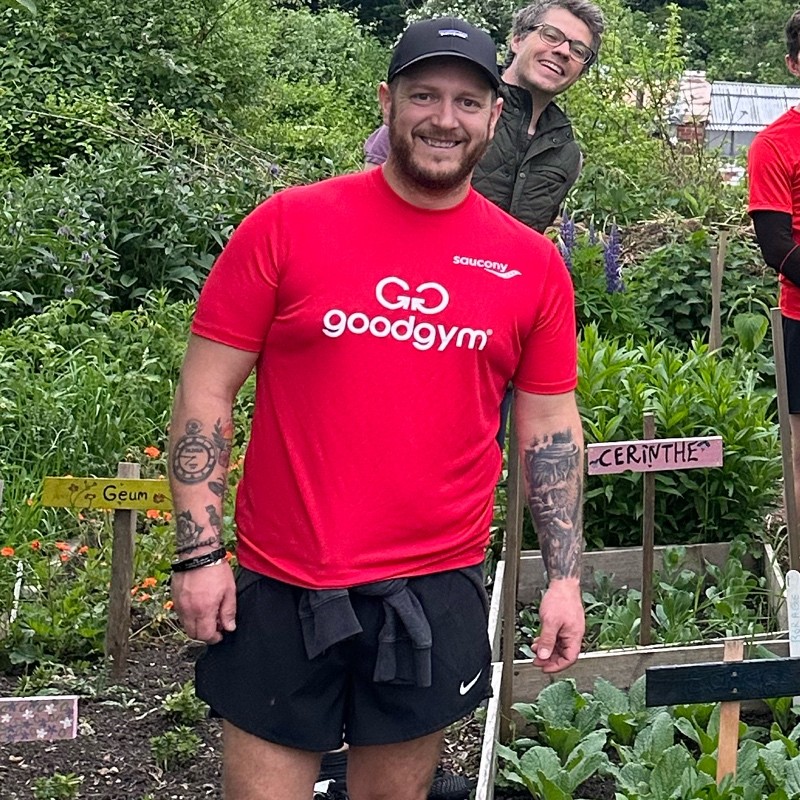
GoodGym began with a simple challenge: why are we lifting weights that do not need lifting, and running miles from A to B, when our communities and the environment are full of real tasks that need strength, energy and action? Our founder, Ivo, realised his run could do more than improve his fitness. He began running to help his community with tasks, giving his workout purpose and real impact. Others saw this and joined in running with him. Running became community action and exercise became an environmental impact...and that moment reframed what sport can be. Today, GoodGym uses movement to turn climate concern into visible, local change. Every week, people run, walk or cycle together to hands-on environmental projects in their own neighbourhoods. Logs become weights. Wheelbarrows become sleds. Digging, planting and habitat building become functional workouts. Streets become running routes. Parks, estates and waterways become shared training grounds and places of climate resilience. Participation is simple and flexible. Young people can sign up in just a few clicks and join regular local sessions without cost or long-term commitment. That accessibility removes barriers and builds habits. Sessions happen weekly so climate action becomes routine rather than reactive. GoodGym harnesses physical activity as an environmental mobilisation tool. Movement builds connection. Connection builds ownership. Ownership builds sustained action. By embedding environmental improvement into exercise, young adults improve the environment and all while improving their own mental and physical wellbeing. We are not asking young people to find extra time for the climate crisis. We are redesigning how they move, train and gather so climate action becomes part of everyday life.
Collaboration with young people and the community: In what ways does your initiative engage young people and community members closest to the problem? What role do they play in building the solution you deliver?
Young people are not simply participants in Movement for Change, they shape how it works. In January 2026, GoodGym ran focus groups with young adults at Paddington Youth Club to better understand their motivations and barriers to participation. Wellbeing was a moderate to top priority for 87% of respondents, and 83% prioritised social connection. In interviews, all participants explicitly described mental health as their primary reason for joining group activity. At the same time, fear of judgement was identified as a barrier by all participants. Many expressed strong resistance to performance culture, rigid commitment and anything that felt pressured. Movement for Change is designed directly in response to these insights. Sessions are low-pressure, beginner-friendly and actively welcoming. Leaders are visible and approachable. There is no expectation of pace, performance or prior experience. Young people join for wellbeing and connection and stay because they build friendships quickly and experience active welcoming from leaders, both identified as universal retention factors in our research. From there, leadership pathways open. Through training 100 young Green TaskForce Leaders, young adults move from attendee to organiser. They shape where sessions take place, influence activities based on local need, and create the welcoming culture they themselves value. We are also recruiting an 18–25 Partnerships and Activation Coordinator to strengthen peer-led outreach and deepen collaboration with youth organisations. This ensures the initiative remains rooted in lived experience and neighbourhood context. Young people are not only participating in this project; they are shaping it, leading it, and sustaining it.
Potential for/Evidence of Impact: How do you imagine your initiative will make a difference in raising climate awareness, shifting behaviors, or reducing environmental impact or harm? If you have already implemented it, what difference have you made so far? What is the impact your initiative has had¡, and/or what impact do you envision having in the future?
What if climate action felt less like protest and more like power? Movement for Change transforms climate worry into collective movement bringing young people together each week to train, build and restore the places they call home. Raising climate awareness Awareness grows through action. When young adults plant trees, restore community gardens or improve neglected estates in their own neighbourhoods, climate change shifts from an abstract global issue to something local, practical and solvable. Participants build a personal connection to places and spaces, increasing long-term environmental responsibility. Shifting behaviours Habit is our impact multiplier with sessions running weekly, creating routine. Participants develop environmental skills, adopt active travel, and grow confidence as local leaders. Crucially, 46.9% of participants report they do not take part in environmental activity outside of GoodGym meaning we are unlocking access for nearly half of those involved. Reducing environmental harm Our projects deliver measurable, place-based environmental gains. We plant trees and greenery that support carbon capture, create and restore habitats, remove invasive species, maintain waterways, and improve biodiversity in underused urban spaces. These practical interventions do more than enhance appearance, they cool overheated neighbourhoods, improve drainage and flood resilience, expand wildlife corridors, and strengthen local green infrastructure. Evidence of scale and future impact GoodGym is already delivering environmental sessions across London, working with hundreds of community partners. Through Movement for Change we will scale this significantly, creating a new generation of climate-active young adults across London.
Innovation: What is different about your initiative compared to other solutions that are already out there? How is your approach original and innovative?
Movement for Change is innovative because it redesigns how climate action is accessed, organised and sustained. Environmental programmes are often site-based, time-limited or skills-specific whilst most sport programmes focus purely on the sport or fitness aspect. We fuse the two into a single, scalable system where everyday movement becomes climate action. Running, walking and cycling are not add-ons, they are the delivery mechanism. This shifts the structure of participation. Instead of asking young people to attend separate climate events, we embed environmental action into a weekly physical routine. Climate action becomes a habit. We also make sure our digital platform removes friction. Opportunities are visible, local and bookable in seconds, lowering the activation energy required to participate. No prior experience, specialist equipment or long-term commitment is needed. That combination of tech-enabled access and community-led delivery creates flexibility at scale. We also shift power. Young people are not simply volunteers; they can train as Green TaskForce Leaders, organising sessions themselves. This redistributes responsibility from professionals to communities, creating peer-led momentum and long-term sustainability. Our model has already been recognised. In 2025 GoodGym became the first charity to win the Sky Zero Footprint Award, outperforming major consumer brands. The campaign, delivering £700,000 in media value (not money) on 2026 will amplify this approach across London and create a rare opportunity to accelerate youth engagement at scale . Movement for Change does not invent a new sport or a new environmental project. It redesigns how both work together to turn everyday fitness into a scalable system for climate action and youth le
Roles and Responsibilities: Describe how responsibilities are shared among your team or partners.
GoodGym Central Team The Central Team provides strategic oversight, quality assurance and consistency across London. The Group Sessions Team oversees delivery, supports Area Activators (AAs) and Green TaskForce Leaders (TFs), and leads the recruitment, training and development of new TFs to ensure safe, inclusive and high-quality sessions. Within the Group Sessions Team sits the: 18–25 Partnerships and Activities Coordinator This dedicated role focuses on engaging young adults. They will build relationships with youth organisations, develop tailored opportunities for 18–25s, support young leaders into TaskForce roles, and ensure activities are shaped around young people’s needs and interests. The Marketing Team is responsible for attracting and onboarding new members and TaskForce Leaders, with a specific focus on engaging young people through digital campaigns, partnerships and targeted messaging. The Tech Team manages GoodGym’s digital platform, which lists local opportunities, enables simple sign-up, tracks participation and uses gamification (e.g. badges and milestones) to encourage sustained engagement. Area Activators (AAs) and TaskForce Leaders (TFs) AAs are local people that coordinate local delivery across boroughs, support partnerships and ensure sessions meet community needs. TaskForce Leaders also organise and lead sessions on the ground, onboard new participants, and act as local champions for youth-led environmental action. Volunteers/Participants Volunteers are central to delivery. Volunteers participate in sessions, develop skills, and progress into leadership roles, ensuring the programme remains peer-led and community-driven. Community Partners Local authorities, community groups, Friends of Parks groups, charities and managers of green and blue spaces provide sites, local knowledge and tasks. These partners help identify priorities, co-design activities and ensure environmental improvements are relevant and sustainable within each neighbourhood. We have hundreds of partners across 26 London boroughs.
Viability and Scalability: How are you setting your organization up for success, and what is your plan to ensure operational sustainability of your solution and its impact? What are your ideas for scaling your initiative to the next level?
Movement for Change is built on GoodGym’s established, city-wide operating model, which already supports regular group sessions, volunteer leadership and local partnerships across London's boroughs. This existing infrastructure provides a strong foundation for delivery, quality control and risk management, ensuring the initiative is operationally viable from day one. Operational sustainability is driven by a peer-led delivery model. By training 100 young Green TaskForce Leaders, responsibility for organising and leading sessions is embedded within communities rather than relying solely on paid staff. This approach reduces long-term delivery costs, builds local capacity and enables activity to continue beyond the funding period. Ongoing support from GoodGym’s Group Sessions Team, alongside marketing and technology functions, ensures consistency, volunteer retention and efficient coordination. Furthermore, the programme is designed to scale through replication rather than expansion of overheads. Sessions use existing public spaces and no-cost activities, making them easy to adapt to new locations. Additionally, our digital platform enables simple onboarding, participation tracking and communication, allowing growth without proportional increases in staffing.
Upcoming Milestones: Please provide an overview of the milestones that are required for your initiative to come to fruition/ to grow.
Quarter 1 Deliver 300 environmental volunteering sessions Engage 250 young adults Train 20 Green TaskForce Leaders Quarter 2 Expand delivery into additional neighbourhoods and green/blue spaces Launch targeted youth recruitment campaigns Deliver 450 sessions Engage 400 more young adults Train an additional 25 Green TaskForce Leaders (45 total) Quarter 3 Deliver the first flagship youth climate action event Deliver 600 sessions Engage 500 more young adults Train an additional 25 Green TaskForce Leaders (70 total) Quarter 4 Deliver the second flagship youth climate action event Deliver 650 sessions Engage 600 more young adults Train an additional 30 Green TaskForce Leaders (100 total) End of Year Outcomes 2,000 environmental volunteering sessions delivered 1,750 young adults engaged (18-25) 100 Green TaskForce Leaders trained (18-25)
Capacity-Building Participation and Support Funding: If you were to make it as a finalist, you will be required to participate in an 8-week capacity building programme. If funding/ cost is a barrier to your participation, we may be able to offer up to 10,000 GBP of grant money available to support you. Please break down below, if it is the case, what costs you would incur and you would need covered. (Please note that there are restrictions on how the grant money may be used; please refer to the T&Cs for further details (LINK).
Participation in the 8-week capacity-building programme should not create a financial barrier for GoodGym. If selected, we would review any specific requirements once programme details are confirmed, but we do not anticipate this presenting an issue at this time.
Now that you've explored what it truly means to put young people at the centre, how are you designing your initiative so that young people are genuine co-leaders and co-creators of the initiative?
Based on the capacity-building work, we are designing Movement for Change so young people are meaningfully involved as co-leaders and co-creators in five practical ways: 1. We will train 100 young TaskForce Leaders - TaskForce Leaders are trained GoodGym volunteers who help organise, welcome and support sessions. This will give young people a clear pathway from first-time participant to regular attendee, peer welcomer, session supporter and local leader. 2. We will design sessions for connection - Young people will help welcome new participants, support buddying or “bring a friend” routes, and help create a friendly session atmosphere. 3. We will use young people’s feedback to shape session design - Their feedback will influence timings, locations, formats, accessibility, welcome and which types of tasks are prioritised. 4. We will involve young people in communications and recruitment - Young people will test messages, contribute to short-form content, share real stories and encourage peers to take part. 5. We will build in regular feedback loops - Young people will tell us what is working, what is not, and what should change, so the initiative continues to be shaped by their experience. This is a direct response to what we have learned through our own work with young people, including test sessions and surveys with St Andrew’s Youth Club and Bermondsey Street Runners, alongside deeper insight gathered by Participation People, award-winning youth voice, engagement and participation experts. On behalf of GoodGym, Participation People spoke directly with young adults in Greater London aged 18 to 25 about climate action, volunteering, physical activity, community, motivation, barriers and communication. We learned that young people are more likely to participate, return and take on leadership roles when climate action feels practical, local, social, low-pressure, visibly useful and communicated through real people rather than adult assumptions. 1. We will train 100 young TaskForce Leaders The clearest route to co-leadership is the TaskForce Leader pathway. Young people will be supported to move from first attendance into repeat participation, peer welcoming, session support and local leadership. GoodGym will provide the structure, training, safeguarding, partnerships and support, but young people will increasingly shape the welcome, peer recruitment, session atmosphere, communications and local priorities. This leadership pathway will be shaped by what young people say motivates them. In our test sessions, the strongest influence on wanting to lead a GoodGym session was helping the environment, selected by 61.5%. Meeting new people/networking was selected by 53.8%. Adding the experience to a CV was the lowest-selected option, at 15.4%. While young people will gain useful skills, leadership will be built around purpose, environmental impact, friendship, confidence and belonging. 2. We will design sessions for connection Young people spoke about wanting friendship, friendliness, people their own age and spaces that do not feel judgmental. Eloise said: “If the vibe is good, then I reckon I’ll continue going.” In response, we will build in clear first-timer welcomes, buddying or “bring a friend” routes, visible peer welcomers, time for conversation and relaxed session formats. This is not just about making sessions more appealing. It creates real roles for young people as welcomers, connectors and community-builders. Our early test sessions reinforce this. The strongest reasons for wanting to come back regularly were sessions close to home, selected by 69.2%, and meeting new people and helping the environment, both selected by 61.5%. Helping the environment, trying something new and socialising were what participants most enjoyed, each selected by 46.2%. 3. We will use young people’s feedback to shape session design Young people care about climate change, but many experience it as too big, abstract or overwhelming. Lauren described climate change as “a very large issue” and said she can feel “a bit powerless”, while Manahil said community activities could make climate action feel “more achievable and less overwhelming”. Because of this, we will prioritise practical tasks with visible transformation for youth volunteering sessions, such as planting, clearing spaces, supporting biodiversity, improving gardens or making community spaces more usable. As young people become regular participants and TaskForce Leaders, they will help feed back on which tasks feel meaningful and suggest local spaces or priorities for future sessions. Young people also told us that sessions need to feel easy to try. Aniqah said attending every Friday at 5pm for weeks felt daunting, and that a low-commitment “side quest” would be more enticing. Manahil said she would be less likely to attend if she felt judged for not knowing what to do. Shorter formats will be tested where appropriate, with clear information and messaging that no previous experience, pace or fitness level is expected. 4. We will involve young people in communications and recruitment Young people said that messaging should not feel like a lecture, council brochure, corporate campaign or guilt trip. Aniqah said Reels, TikTok and YouTube Shorts would better show what happens in under 30 seconds. Therefore, young people will test messages, contribute to short-form videos, share real stories and support peer-led recruitment, with insight shared across GoodGym’s communications team and partners. This means young people are not only being invited into the project. They are helping shape the invitation itself. Representation is also part of this. Young people said that environmental and volunteering spaces do not always feel visibly diverse or representative, and that it matters to know “other people like me were there”. It is important to show young people from different backgrounds as participants, welcomers, storytellers, peer advocates and, over time, leaders. 5. We will build in regular feedback loops The initiative will continue to be shaped through young people’s ongoing feedback, not only through one-off consultation. In our early test sessions, before the GoodGym session, 61.5% of participants said they were unlikely to take part in environmental volunteering locally. After the session, 84.7% said they were likely or very likely. Participants said they did not realise local projects were easily available, that they could help without a huge time commitment, and that the session was easy, well organised, social, enjoyable and visibly useful. This shows the barrier is not lack of care from young people, but lack of accessible, social and local routes into action. We will use ongoing feedback to adjust timings, locations, formats, welcome, messaging, task types and leadership support. Young people will shape how the project feels, how peers are welcomed, how the offer is communicated, how participation is made easier, and how leadership develops. As Eloise told us: “If the vibe is good, then I reckon I’ll continue going.”
What partnerships and collaborations are most critical to delivering and sustaining your initiative and how are you building/ plan to build them?
The partnerships most critical to Movement for Change fall into five groups: Local environmental and community partners Youth-facing networks GoodGym’s delivery workforce Knowledge and insight partners Ambassadors/storytellers. The first critical group is our place-based environmental and community partners. These partners provide the sites, tasks, local knowledge and community priorities that make the activity real. Across London, GoodGym already works with thousands of organisations across 26 boroughs including local authorities, parks teams, housing associations, schools, community gardens, Friends of Parks groups, charities, environmental groups, estate teams, volunteer centres and managers of green and blue spaces. Examples include Ocean Youth Connexions in Tower Hamlets, Lark Hall Gardens in Wandsworth, Western Road Urban Garden in Ealing, St Alfege’s School Community Garden in Greenwich and Gale Street Organic Community Garden in Barking. Through Movement for Change, we will work with partners to identify tasks that are suitable for young people, have clear local value and offer visible transformation, such as planting, improving food-growing spaces, clearing overgrown areas, supporting biodiversity, improving estates and caring for parks and community gardens. Young taskforce leaders will be trained to contact organisations and causes they know and care about and set up tasks. We will reach new local partners through direct outreach, referrals from councils and volunteer centres, and introductions from existing GoodGym partners. The second critical group is youth-facing networks. Our insight work showed that young people are more likely to take part when opportunities feel social, welcoming, local and connected to people like them. We are therefore building relationships with youth organisations, running communities, university networks and culturally diverse activity groups. These include organisations like St. Andrew’s Youth Club, Ocean Youth Connexions, North Paddington Youth Club, London School of Economics and Political Science and Kings College London. We are also working with group like LDN SLCT, The Running Charity, Asian Girls Run, London Arab Running Club, Muslim Runners, Mindful Strides and Black Trail Runners. We are building these partnerships through practical collaboration, not just promotion. This includes inviting groups to taster sessions, co-promoting suitable activities, creating clear routes for their members or students to attend, and using feedback from these groups to improve the welcome, session format and messaging. For universities and student groups, we will explore opportunities around moments such as Welcome Week, when young people are actively looking for community, wellbeing and purposeful activities, with the University of Greenwich and London School of Economics already in discussions for potential collaborations. For running and movement groups, we will build on shared values around movement, connection and local impact, positioning GoodGym as a way to turn a social run or walk into practical climate action. The third critical group is GoodGym’s delivery workforce. Local Leaders, volunteers and the GoodGym central team are the connectors who turn interest into safe, well-organised activity. Area Activators understand local boroughs, maintain partner relationships, identify tasks, support delivery and ensure sessions are practical and inclusive. TaskForce Leaders help organise and lead sessions, welcome participants and create the friendly culture that young people told us matters. Existing GoodGym volunteers can also bring friends, peers and local contacts into the initiative. This delivery network is what allows the initiative to start safely and scale sustainably. Young people will not be asked to design or manage environmental sessions from scratch. GoodGym will provide safeguarding, risk management, training, digital sign-up, session listings, partner coordination and quality assurance. As young people attend regularly, build confidence and progress into TaskForce Leader roles, they will gain more ownership over the welcome, social culture, peer recruitment, local priorities and future session development. The fourth group is our knowledge and insight partners. We are working with Participation People, who have supported us to understand young adults’ motivations, barriers, language preferences and expectations. We are also working with the London School of Economics for evaluation and delivery collaborations and the Running Industry Alliance who are providing insights into community runs. These partners help us understand what works, test assumptions, strengthen evidence and adapt the initiative so it remains youth-centred, inclusive and effective. The fifth group is ambassadors and storytellers. Young leaders, confident GoodGym volunteers, Area Activators, youth ambassadors, community champions, partner organisations, local micro-influencers, social media storytellers, video creators, councillors and supportive local public figures can all help encourage others to take part. This matters because our youth insight showed that young people are influenced by seeing people like them taking action. We will build this by supporting young people and partners to share real stories, short-form content and visible examples of local impact. GoodGym’s network across London is already large and diverse, spanning community organisations, environmental groups, local authorities, schools, universities, housing associations, running groups, youth organisations and volunteer-led networks. It is also dynamic. GoodGym is constantly meeting new people, building new relationships and responding to opportunities in different boroughs. Movement for Change will build on existing reach while continuing to onboard new partners who can help us reach young people, identify meaningful environmental tasks and sustain local activity. Connecting partners and collaborators will help to build a solid community that works, which is vitally important as demonstrated by one young person who said “people just want to know that when they go and do something like this, there will be a community.””
What are you measuring, how are you measuring it, and what does the data tell you so far (quantitative and qualitative)?
We are measuring six things: Environmental activity Youth reach and participation Participant experience Wellbeing impact Attitudes towards climate action Progression into leadership We will measure these using a mix of quantitative data and qualitative feedback: GoodGym’s digital platform and session records, attendance and repeat attendance data, participant surveys, before/after questions, young leader reflections, partner feedback, photos, case studies and quotes from young people. First, we will measure delivery and environmental activity. Through GoodGym’s platform and session records, we will track the number of environmental sessions delivered, volunteer hours, boroughs and neighbourhoods reached, community and environmental partners involved, and the types of environmental tasks completed. This will include planting, food-growing, biodiversity work, litter removal, community garden improvements and other improvements to parks, estates and green spaces. We will also collect photographs and partner feedback to show what changed at each site. Second, we will measure youth reach and participation. We will track the number of young people aged 18 to 25 engaged, attendance and repeat attendance, and the number of young TaskForce Leaders trained. These measures will help us track progress against our targets of 2,000 environmental sessions, 1,750 young people engaged and 100 TaskForce Leaders trained. Third, we will measure young people’s experience of the sessions. This will help us understand whether the offer feels accessible, welcoming and worth returning to. We will use surveys, informal feedback, quotes, case studies and young leader reflections to understand whether participants felt welcomed, whether the session felt low-pressure, whether they met new people, whether they felt comfortable and not judged, whether they would come back, and whether they would recommend the session to a friend. We will use this feedback to adapt the welcome, session format, timing, messaging and first-timer experience as the project develops. Fourth, we will measure wellbeing impact, including social connection, confidence, belonging, loneliness, life satisfaction and sense of worthwhileness. This is a major strength of the project because we are partnered with the London School of Economics and Political Science who will analyse the data using the same approach as GoodGym’s previous LSE evaluation. In that evaluation, which measured six outcomes of mental wellbeing, GoodGymers were found to have a positive change across all six, with the boost in life satisfaction equivalent to that observed in someone moving from unemployment into six months of employment. Specifically, participation in GoodGym was found to increase life satisfaction by 21%, increase worthwhileness by 17%, decrease mental distress by 21%, decrease loneliness by 12%, increase belonging by 27%, and increase connectedness by 16%. This partnership with LSE will allow us to produce robust evidence on whether combining movement, volunteering, community and climate action improves young people’s wellbeing. This goes beyond standard project monitoring and gives Movement for Change a distinctive evaluation strength, particularly because it combines GoodGym’s scale, delivery infrastructure and academic partnership and analysis. Fifth, we will measure whether young people’s attitudes towards climate action change through surveys. We will ask young people how likely they are to take part in local environmental volunteering before and after sessions, whether they know where to find local opportunities, whether they feel more confident taking environmental action, and whether they understand how physical activity, community and climate action can connect. This matters because the aim is not only to deliver sessions, but to help young people experience climate action as something practical, local, social and achievable. Sixth, we will measure leadership and progression. We will track how many young people move from first attendance to repeat participation, peer welcoming, session support and TaskForce Leader training. We will also ask what motivates them to lead, what support they need, and whether they feel able to influence the welcome, social culture, peer recruitment, local priorities and future session development. Our early test session data is also encouraging. Through sessions with St Andrew’s Youth Club and Bermondsey Street Runners, before the GoodGym session, 61.5% of participants said they were unlikely to take part in local environmental volunteering. After the session, 84.7% said they were likely or very likely. Participants said the session helped them realise local environmental projects were available, that they could help without a huge time commitment, and that the experience was easy to turn up to, well organised, social, enjoyable and visibly useful to the local area. The same survey also showed that physical activity is the method, but not the only motivation. The strongest reasons for wanting to come back regularly were sessions close to home, selected by 69.2%, and meeting new people and helping the environment, both selected by 61.5%. Helping the environment, trying something new and socialising were what participants most enjoyed, each selected by 46.2%. We will continue monitoring these factors across future sessions to see whether the same pattern holds, and to adapt the offer around what actually brings young people back. The leadership data is also useful. The strongest influence on wanting to lead a GoodGym session in future was helping the environment, selected by 61.5%. Meeting new people/networking was selected by 53.8%, while adding the experience to a CV was the lowest-selected option, at 15.4%. We will continue to ask young people about leadership motivations so that the TaskForce pathway is framed around purpose, community, environmental impact and belonging, rather than employability alone. Overall, we will use the data to not only report against targets, but to improve the project as it develops. It will help us adapt session timings, locations, welcome, messaging, partner relationships and leadership support, so Movement for Change remains shaped by young people’s real experiences rather than our assumptions. As Sanjana told us, what would make her show up is “having a community, having friendly people around who are genuinely interested in making a difference.” That is what we will keep measuring: whether Movement for Change feels not only active and environmental, but welcoming, purposeful and worth returning to.
Long-term impact: what lasting systems change are you seeking to create and how will you know when it has happened?
The lasting systems change we are seeking is to contribute to a wider London system where young people can access climate action through movement, community and local green space. We want to contribute to a system where climate action is not an extra activity young people have to search for. It becomes a normal, social and visible part of community life, connected to the parks, gardens, estates and green spaces around us. We are not trying to create a separate system from scratch. We want to help join up parts of the existing system that are currently fragmented: sport and physical activity, youth engagement, environmental volunteering, community action, green space management and local leadership. At present, physical activity is often framed around performance, competition, gyms or individual improvement, while environmental volunteering can feel separate from everyday life, one-off, adult-led or hard to find. Young people may care deeply about climate change, but not know where to start, who to go with, or how to take part in a way that feels accessible, social, enjoyable and worthwhile. Movement for Change aims to shift this by making local climate action easier, more visible and more fun to take part in. We want to have free, flexible and local opportunities that combine outdoor movement, volunteering, climate action, wellbeing and belonging. We will use the 5R Framework from the capacity-building process to understand whether this systems change is happening: Results, Roles, Relationships, Rules and Resources. The quantifiable Results we want to see are detailed in the answer to question 3 and include regular youth participation, more young climate leaders, greener and better cared-for local spaces, and stronger wellbeing, connection and belonging. The Roles need to shift so young people are not only participants, but peer welcomers, storytellers, role models, co-leaders and TaskForce Leaders. We want young people to be visible examples of positive, fun and purposeful climate action, encouraging others to see environmental volunteering as something people like them do. We will quantify this through how many young people become leaders, role models and storytellers. The Relationships need to become more joined up. Success would mean youth organisations, universities, running groups, local authorities, parks teams, community gardens, housing associations and environmental organisations seeing GoodGym as a reliable route for engaging young adults in practical environmental action. Rather than working in isolation, these partners will be connected through a repeatable model where local environmental need, young people’s energy and GoodGym’s delivery infrastructure come together. The Rules and mindsets need to change too. We want physical activity to be understood less narrowly as sport, pace or performance, and more as outdoor movement with purpose: a way to connect with others, improve wellbeing, spend time in green space and make local places better. We also want climate action to feel less overwhelming and more practical, local and achievable. We will analyse this through surveys and feedback. The Resources need to be better connected. This includes GoodGym’s digital platform, Area Activators, TaskForce Leaders, local partners, green spaces, youth insight, training, communications and community tasks. Success means these resources are not temporary or isolated, but part of a stronger local infrastructure for youth-led environmental action. We will know this change is happening when the model continues beyond individual funded activities. Indicators will include young people returning regularly, bringing peers, progressing into TaskForce Leader roles, and co-leading sessions. We will look for youth-facing partners repeatedly referring young people into sessions, environmental partners hosting repeat activity, and local organisations reporting that they now have a more reliable way to involve young adults. We will also look for changes in young people’s own language and behaviour. Are they describing climate action as social, local and achievable? Are they feeling ownership of their local green spaces? Are they more connected to and proud of their area? Are they more likely to protect, improve or volunteer regularly with local green space projects? Are they bringing friends because the activity feels enjoyable and meaningful? Ultimately, success will mean young Londoners no longer have to choose between getting active, making friends, supporting their wellbeing and taking climate action. The lasting change we want to contribute to is a London-wide culture where those things are connected, accessible, enjoyable and youth-led. As Priscilla told us, the aim is to create “a tone of hope and being part of a bigger thing”, where young people feel: “we can do this, we can get better, we actually can make an impact.”
Is there anything else you'd like to share with us that you were not able to share in previous questions?
Young people told us they want opportunities that are: Flexible enough to fit around busy lives Social and welcoming, not formal or judgmental Low-commitment and easy to try Local and easy to get to Purposeful, with visible impact Rooted in real community, not just individual fitness We have listened to young people and we are well positioned to deliver this and make sure we excel at all of them. This is exactly what Movement for Change is: free, local climate action sessions that combine movement, community, volunteering and practical environmental impact, with a pathway into leadership for those who want to go further. The insight has also shown that delivery alone is not enough. To make this work at scale, we need to reach young Londoners through the right messengers, messaging and media. GoodGym is an intergenerational community, and young adults are already part of our membership, volunteering and staff networks. However, this process has helped us listen more carefully to younger Londoners and test how Movement for Change can be communicated in a way that feels clear, relevant and authentic. Our youth insight showed that younger people respond best to communication that is short, visual, direct, honest and rooted in real experience. They are less likely to engage with messaging that feels overly formal, corporate, guilt-led or disconnected from their lives. This has shaped not only what we say about Movement for Change, but where we say it, who says it, and what kind of content we test. Historically, GoodGym has mainly used word of mouth and Meta advertising to promote opportunities. Through this process, we have begun testing a more evidence-led digital engagement approach informed by what young people told us they wanted: short-form content, real examples and clear explanations of what actually happens. As part of the development of Movement for Change, we tested the same 15-second London-targeted video creative across Meta (Facebook and Instagram), Reddit and TikTok, with an equal £1,250 budget on each platform. The early results show a clear difference in performance. TikTok has delivered the strongest results so far at the time of completing this application, reaching 98,623 people, generating 4,377 clicks, achieving a 2.50% click-through rate and a cost per click of £0.23. By comparison, Meta reached 35,906 people, generated 1,020 clicks, had a 1.49% click-through rate and a cost per click of £0.97. Reddit reached 47,406 people, but generated 668 clicks, with a 0.53% click-through rate and a cost per click of £1.46. We are not treating this as a final conclusion, as we still need to review conversion data and sign-ups. However, the early traffic and engagement results strongly support what young people told us during the insight process: short-form, visual and platform-native content is likely to be critical to cutting through. It also suggests that Movement for Change can combine grassroots partnerships with scalable digital outreach, helping us move beyond traditional volunteering promotion. The long-term opportunity is not simply to run more adverts. It is to build a youth-focused communications model that uses peer-led stories, short-form video, authentic language, platform testing and young people’s own insight to bring more young Londoners into local climate action. We want the message to come through the right people, in the right format, on the right platforms, and to feel like an invitation rather than a lecture. Young people told us this clearly. As Aniqah said: “short form content like reels, TikTok, YouTube Shorts are a really good way of showing us exactly what's going on in under 30 seconds.” Manahil also told us: “A lot of people my age can tell when messaging feels too forced or too corporate.” That is the communications challenge we are responding to: making climate action visible, relatable, social and easy to join. As Sanjana told us: “What would make me show up to GoodGym is having a community, having friendly people around who are genuinely interested in making a difference.” Manahil said she wants it to feel “motivating, comforting, inclusive” and like she is “contributing to something without feeling judged or pressured.” Lauren said the focus should be on “community, meeting friends, finding people… build connections, nothing too intense.” And Sanjana summed up the opportunity simply: “I think combining exercise with community and volunteering is a great initiative, and it’s something that I would love to do.”
If you selected “Other”, please specify below.