My initiative is designed for and delivered in London
Yes
I am 18 years of age or above, by the application deadline.
Yes
My organisation is a registered UK entity and has a London-based address.
Yes
My organisation is a non-profit (e.g. school, university, or local authority) — not a for-profit, which can only join as a partner.
Yes
If there is a for-profit organisation as a partner in my initiative, they work on a cost-recovery basis only.
Yes
My solution is implemented at scale, or if not, I have a clear business plan, a minimum viable solution (prototype, pilot, or proof of concept), and evidence of work or impact in London within your coalition.
Yes
I am aware that, if I am submitting more than one application to a Challenge run by Ashoka and Go! London, only one of them is able to progress through the stages.
Yes
Are you an employee (and their children and grandchildren) of Ashoka or any of its respective affiliates and participating advertising and promotion agencies?
No
I have read and accepted the Challenge Terms & Conditions
1
First Name
Last Name
Pronouns
I would like to receive notifications and updates about Go London!, Ashoka, Ashoka Changemakers, and other Ashoka opportunities.
Are you an Ashoka Fellow?
Are you applying from an organization founded by an Ashoka Fellow?
If you are applying from an organization founded by an Ashoka Fellow, please specify the name and organisation of the fellow below.
Initiative Title
Play for the Planet Initiative
Lead Organization Name
Sporting Way CIO
My initiative is designed for and delivered in London
1
Year that you started/ registered your organisation
2017
Website URL(s) or Social Media Handles
https://sportingway.co.uk/
Initiative Stage
Idea (You have a solid concept and are hoping to get started in the future)
Sectors/Themes: What topic does your project most directly relate to?
Environment & Sustainability
Initiative Summary: Describe your initiative in one sentence
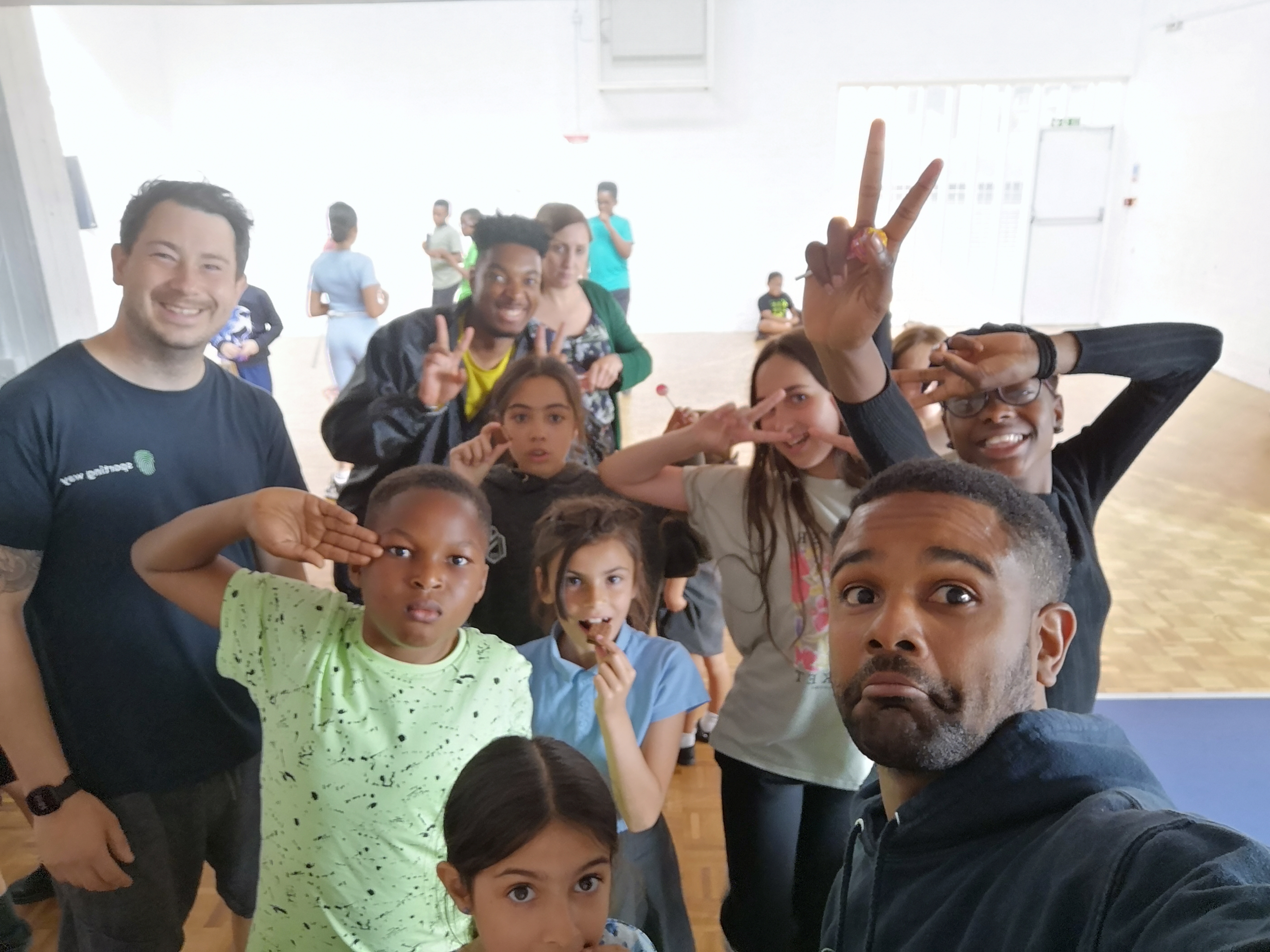
Play for the Planet is a year-long school sport programme that empowers primary school children to reduce carbon emissions through active travel, and uses sport to take action on climate change.
Challenge Focus: What topic does your initiative most directly relate to?
Climate action through awareness and engagement
The Problem: What problem are you helping to solve and who will benefit the most from your solution? How close are you to the problem and/or community impacted?
Short car journeys to and from primary schools are a significant and avoidable source of carbon emissions in London. In the boroughs of Greenwich, Lewisham and Bromley, many pupils live within walking or cycling distance of school, but many of us still use cars. This reduces our daily physical activity and contributes to more negative environmental impact. We are becoming increasingly aware of climate change but often lack practical, age-appropriate ways to turn knowledge into action. It seems like too big a problem to address! It can feel overwhelming, abstract and disconnected from our everyday lives and routines. This then makes sustained behaviour change difficult. The children who benefit most from our solution are primary school pupils. Their families and wider school communities also benefit through improved air quality, healthier travel habits and increased environmental awareness. We are closely connected to the communities impacted. We work directly with primary schools across these boroughs, delivering PE, sport and wellbeing programmes. We also run an afterschool youth provision right on the border of the 3 boroughs, so we understand the negative impact climate change is having locally. This proximity allows us to design a solution rooted in the realities of local school life, using sport as a trusted and motivating platform for climate action.
Your approach: How are you addressing the problem outlined above? How are you using the power of sport and physical activity to build awareness, shift behavior, and enable sustainable participation for all in response to the climate crisis? We'd love to know about the origin of your idea, and what was your "aha" moment" that led you to take action?
Play for the Planet addresses this challenge by putting in place climate action into children’s everyday routines through sport and physical activity. We use PE lessons, school sport and active travel as practical tools to help students. We believe, if we encourage more activity, we can change mindsets towards commuting. So, children in Years 3–5 will be encouraged to walk, cycle or scoot to school. This will be recorded to calculate the collective impact. There will also be school-wide design competitions where students submit sustainability-themed designs for the school kit, including water-bottle, lunch box and bag. These will be provided at the zero-waste Play for the Planet Sports Festival in the summer term. All kit will be made from recycled material. To change mindsets around physical activity at the same time, we need to make it varied and fun. We will deliver inclusive, PE sessions in basketball, tag rugby, hockey and Funetics (athletics), within the school curriculum. The zero-waste Sport Festival will be where Planet Player schools come together to celebrate participation, not performance. All equipment is also reused. The venue is close to all the schools so walking will be encouraged. Tournaments for Tag Rugby, hockey and basketball. There will be individual events of triathlon, archery and athletics. The idea for Play for the Planet emerged from our work in these schools, where we repeatedly see children arrive by car despite living nearby. At our afterschool provision, we started running a collection service where we take the children directly to the youth club from the school. It was then we noticed how many children actually drive despite living close. It showed how congestion caused such danger to our children.
Collaboration with young people and the community: In what ways does your initiative engage young people and community members closest to the problem? What role do they play in building the solution you deliver?
Play for the Planet is built around active leadership and participation of children, using the school communities as vehicles of change. Therefore, the students will not be passive recipients of the programme. They play a central role in shaping how it progresses. The kit is designed by the children. Also, there will be opportunities for specific adaptations to increase inclusivity. For example, some students at 2 schools have already asked for a Library of scooters to be provided for children. These scooters can only be used to commute to and from school and must be booked in advance and must be used instead of driving. This will give students a real sense that they are being listened to, and that they are a part of the solution. They are Planet Players! All students are invited to take part in a school-wide design competition to create their team kit, including PE kit, water-bottle, lunch box and bag all from recycled materials. This ensures every child can contribute, regardless of sporting ability, and reinforces principles of sustainability, creativity and circular design. Teachers play a key role by integrating Play for the Planet into the PE curriculum, reinforcing climate learning through sport. Families are engaged through school communication and travel initiatives, encouraging changes beyond the school gate. Local and national sports partners contribute expertise and role models, strengthening community ownership and ensuring the programme reflects the needs and realities of the schools involved. Together, this collaborative approach means Play for the Planet is shaped by the people closest to the problem and creates lasting, community-led climate action through sport
Potential for/Evidence of Impact: How do you imagine your initiative will make a difference in raising climate awareness, shifting behaviors, or reducing environmental impact or harm? If you have already implemented it, what difference have you made so far? What is the impact your initiative has had¡, and/or what impact do you envision having in the future?
This project is designed to deliver measurable short-term behaviour change and long-term cultural shifts in how our communities think about travel, sport and sustainability. In the short term, the initiative will engage all pupils in Years 3–5 across 10 local primary schools, reaching an estimated 1,800–2,400 children. Outputs include weekly PE sessions integrated, the active travel challenge, student-designed recycled sports kit bag, and zero-waste Multi-Sport Festival. These activities will raise climate awareness. Behaviour change will be measured through the percentage of pupils switching from car travel to walking, cycling or scooting, and the total distance travelled actively over the academic year. Using standard UK emissions factors, this data will be used to estimate carbon emissions avoided, providing clear evidence of environmental impact. Additional indicators include participation rates, festival attendance and the volume of kit produced using recycled materials. Also, each school will commit to implementing changes within the school. For example, the use of recycling bins, compost tumblers, reduced paper use etc. Over the longer term, Play for the Planet aims to create deep-rooted change through these changes in sustainable practices into school culture. By integrating climate action into PE and giving schools a shared Planet Players identity, the programme supports habits that can continue beyond the funding period. With our established relationships with schools and national governing body partners, we believe we can create a credible pathway to scaling the model across additional schools and boroughs. Over time, Play for the Planet has the potential to influence thousands of pupils, and demonstrate how sport can make real meaningful change.
Innovation: What is different about your initiative compared to other solutions that are already out there? How is your approach original and innovative?
Play for the Planet is innovative because we try to tackle the root causes of climate action in several different ways. This problem does not have one simple solution, but also it can be overwhelming when taken in its entirety. So we need to make several small changes, with the goal of them having larger impact. Commuting, attitudes to physical activity and community action all make a significant difference. This project will enable consistent measurable action through small changes in routine. So, the project applies existing approaches like active travel, school sport and environmental education in a new, integrated way. We build a narrative where schools and students are proud to be Planet Players. To then celebrate this change in mindset at a festival of sport will further engrain it in our community. A key innovation is the use of sport as both a motivator and a measurement tool. Children track their active journeys and see the collective impact of their behaviour over time, creating a tangible connection between daily decisions and environmental outcomes. This data-led approach allows schools to evidence behaviour change and estimate carbon reduction in a way that is accessible and age-appropriate. The programme also introduces youth-led circular design through a kit design competition. This gives all students a creative role in shaping sustainable sport, reinforcing ownership and inclusion while modelling circular economy principles in practice. By embedding climate action into school systems, PE delivery and community identity, Play for the Planet shifts behaviours, expectations and norms — creating a scalable model for sustainable participation through sport.
Roles and Responsibilities: Describe how responsibilities are shared among your team or partners.
We will act as the lead organisation and overall programme manager for Play for the Planet. We are responsible for project design, coordination, safeguarding, budget management, monitoring and evaluation, and reporting on outcomes and climate impact. As a delivery partner for England Athletics, we will also deliver PE sessions through our Funetics programme and oversee the integration of climate learning across all activities. We will work with the primary schools to ensure they are comfortable with including the project content within the school timetable, supporting pupil participation in active travel initiatives, and facilitating data collection through existing school systems. Teachers play a key role in reinforcing climate messages and supporting inclusive participation across Years 3–5. The national and local sports partners will contribute specialist delivery and expertise. The Rugby Football Union supports tag rugby delivery and tournament facilitation, England Athletics supports athletics activity, British Triathlon contributes to active travel messaging and the mini-triathlon element, Blackheath & Elthamians Hockey Club delivers hockey sessions within PE and supports the festival. We also have strong links with local sports coaches, who will provide continuity in cases of illness or absence. University of Greenwich students support the recycled kit design competition as volunteers. We will work with Fashion Retail Academy to produce the kit using only recycled material. Eltham College provides the venue for the zero-waste Multi-Sport Festival, supporting logistics and event delivery. Clear roles, shared planning and regular communication ensure responsibilities are well coordinated and the programme is delivered safely, inclusively and effectively.
Viability and Scalability: How are you setting your organization up for success, and what is your plan to ensure operational sustainability of your solution and its impact? What are your ideas for scaling your initiative to the next level?
Play for the Planet is designed as a viable, school-integrated programme that can be delivered effectively within existing education and sport systems. We are already established within the primary schools and have an experienced coaching workforce. We have also got strong partnerships with the national governing bodies who will be assisting us. This delivery within the PE curriculum avoids reliance on short-term or extracurricular engagement and ensures consistent participation across the academic year. Operational sustainability is supported by a clear delivery model, standardised session plans, simple monitoring tools and shared responsibilities with schools and partners. Data collection on active travel and participation is designed to be low-burden and age-appropriate, enabling schools to continue elements of the programme beyond the funded period. The Planet Players identity further supports sustainability by giving schools a recognisable framework they can maintain year on year. Scaling is a core part of the programme design. Play for the Planet operates on a per-school model that can be replicated across additional schools and boroughs with minimal adaptation. Future growth could include expanding to more London boroughs, developing digital tools to support travel tracking, and training teachers to deliver elements of the programme independently.
Upcoming Milestones: Please provide an overview of the milestones that are required for your initiative to come to fruition/ to grow.
Preparation and Set-Up (June–August 2026) Key milestones include confirming participating schools, formalising delivery agreements with partners, recruiting and scheduling coaches, and finalising safeguarding and risk assessments. Monitoring tools for active travel and participation will be agreed with schools, and University of Greenwich student volunteers will be recruited and briefed to support the kit design element. Programme Launch (September 2026) Play for the Planet will launch at the start of the academic year. Schools will be introduced as Planet Players through assemblies and classroom activities, and the active travel challenge will begin. Weekly PE sessions will commence for Years 3–5, integrating climate learning into sport delivery. Programme Delivery (September 2026 – June 2027) Throughout the academic year, schools will deliver two PE sessions per week supported by Sporting Way and partners. Pupils will track active journeys to school, and schools will review progress regularly. The student kit design competition will run during this period, supported by University of Greenwich volunteers, with recycled kits produced and distributed. Mid-Programme Review (January–February 2027) A mid-year review will assess participation levels, behaviour change trends and delivery quality. Adjustments will be made where needed to maximise engagement and impact. Multi-Sport Festival (June 2027) Planet Player schools will come together for a zero-waste Multi-Sport Festival, celebrating participation and collective climate action. Evaluation and Learning (June–July 2027) Final data will be analysed, including active travel outcomes and estimated carbon reduction. Learning will be shared with schools and partners to support future delivery and scaling.
Capacity-Building Participation and Support Funding: If you were to make it as a finalist, you will be required to participate in an 8-week capacity building programme. If funding/ cost is a barrier to your participation, we may be able to offer up to 10,000 GBP of grant money available to support you. Please break down below, if it is the case, what costs you would incur and you would need covered. (Please note that there are restrictions on how the grant money may be used; please refer to the T&Cs for further details (LINK).
We would love the opportunity to participate fully in the 8-week capacity-building programme. We certainly recognise the value in it strengthening the sustainability and scalability of the Play for the Planet project. We are a small charity and we acknowledge delivering a year-long, multi-school programme, will have an impact on staff time and related costs. Only if it is available, support funding would be used to cover a proportion of the following eligible costs: • Monitoring and evaluation support, including refining data collection, carbon measurement and impact reporting frameworks • Learning and implementation costs related to applying insights from the programme to strengthen governance, partnerships and scaling plans Any support received would directly enhance our ability to maximise the value of the capacity-building programme and apply learning to the Play for the Planet project, so it is delivered effectively. We are committed to meeting all requirements of the capacity-building programme and to using any support funding in line with the published terms and conditions.