Country of Residence
Nigeria
Age
18
Project title
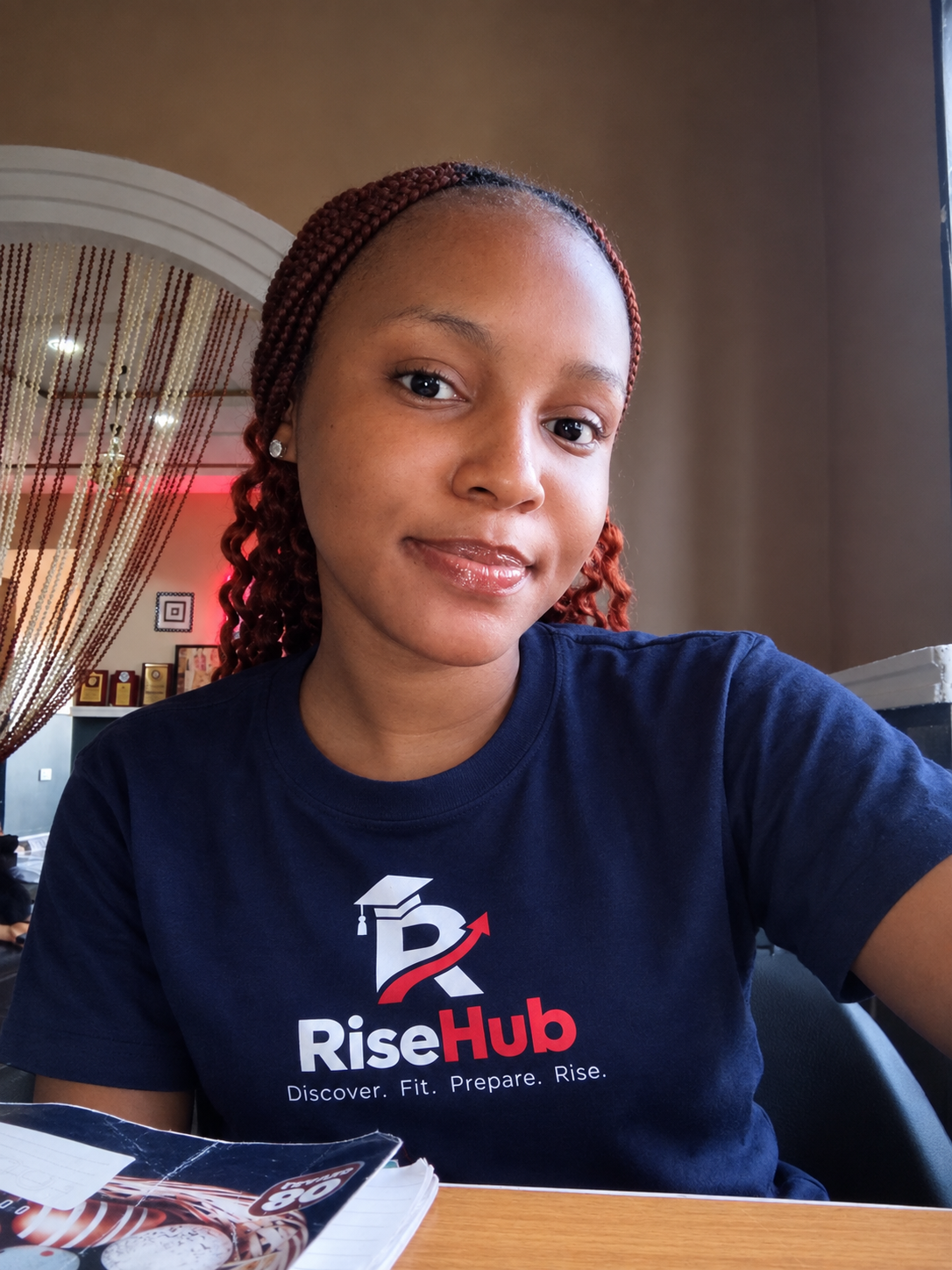
RiseHub
Project Summary: Describe your project in one sentence
RiseHub is a student-focused opportunity and growth community working to bridge the gap between potential and access by using platforms students already use, alongside guidance and outreach, to help young people, especially those outside traditional opportunity networks, discover relevant opportunities, prepare strong applications, and gain the support they need to pursue them.
Website URL(s) or social media handles.
https://www.linkedin.com/in/immaculate-ikegwuonu-16a26b378
Project Category
My project is an existing project that I started
Project Stage
Growth (We’ve moved past the very first activities and are beginning to have consistent weekly or monthly impact)
Founding Story: What was the spark that led you to start your project? What was the "Aha!" moment that led you to get started and see the potential for this to succeed?
I had 250+ opportunities saved in my spreadsheet, yet I felt like I had found nothing. When I received a scholarship to continue my secondary education in Anambra State, I discovered a different side of student life from the rural area I grew up in Taraba State. I saw NGOs, student communities, and platforms connecting young people to opportunities beyond the classroom. I started participating and discovering things I had never encountered before. It showed me how access could change what a student sees as possible. My “aha” moment came in university, when I no longer had teachers bringing opportunities to me. I had to find them. I could spend hours on Google typing “opportunities for undergraduates,” opening websites, checking eligibility, saving opportunities, and moving to the next. The list kept growing, but my options didn't. I had over 250 saved, yet only a handful fit me. That was when I realized the problem wasn't that opportunities didn't exist. Finding the right ones was overwhelming. Then came the applications and requirements, which could make a good opportunity feel out of reach. Sometimes, I didn't need someone to do it for me. I needed help finding what fit, someone to ask, “Have you applied yet?” and keep me going. That frustration became the spark for RiseHub: to help student find the right opportunities, prepare for them, and keep going.
The Problem: What problem are you helping to solve? Why does it matter to you and your community?
I remember the nights I stayed up searching Google for opportunities. I would check each one to see if I could apply, and if I couldn’t, I moved to the next. Then another, and another. After hours of searching, I would look at my list and realize that out of all those opportunities, only a few suited me. My list was very long, but my options were not. After a while, I started wondering if there could ever be an opportunity for someone like me. Then I started noticing the same pattern in my own student community. I saw students with potential miss opportunities because they were not on the platforms where they were shared, did not know where to look, or lacked the CVs, accounts, projects, or guidance needed to apply. Even after finding the right opportunity, the process could still feel overwhelming. Sometimes, all a student needed was someone to ask, “Have you applied yet?” and encourage them to keep going. Seeing this made me realize that the problem is not that opportunities do not exist. The problem is that access to those opportunities is uneven. There is a gap between students and the opportunities that could help them grow, and many capable students are left navigating that gap alone. This matters to me because I have experienced that gap myself and seen talented students in my community face it too. That experience inspired me to start RiseHub.
Your Solution: How are you solving this problem? Share your specific solution.
RiseHub solves this problem by turning the overwhelming search for opportunities into a guided process, using WhatsApp, a platform students already use every day. I chose WhatsApp intentionally because students are already using it. Instead of creating another platform they would have to learn or remember to check, I can easily reach students where they already are, through university and departmental groups. When a student joins RiseHub, they fill out a Google Form sharing their education level, interests, skills, goals, and the opportunities they are looking for. This helps me understand what each student needs. I then search for scholarships, fellowships, internships, competitions, bootcamps, volunteering opportunities, and other programs and filter them based on relevance and eligibility. Instead of overwhelming students with hundreds of links, I share opportunities that fit them and explain important requirements and application steps. But finding an opportunity is only the first step. I help students prepare their CVs and LinkedIn profiles, understand eligibility requirements, improve applications, and navigate steps they may not know how to complete. I also organize practical sessions on CVs, LinkedIn, and applications and use voice notes to explain things more clearly when needed. For students who need more personalized support, I hold one-on-one sessions every Sunday from 2 p.m. to 4 p.m., where we go through opportunities and applications step by step. I also follow up with students. Sometimes the support they need is simply someone asking, “Have you applied yet?” and encouraging them to keep going. Through this approach, RiseHub helps students move from finding an opportunity to understanding it, preparing for it, and taking action.
Impact: How has your project created impact / made a difference so far? Or, if at an early stage, what will impact look like?
I built the RiseHub WhatsApp community on September 9, 2026, with 8 students. Students invited friends, and in less than two weeks, we grew from 8 to 50, then 90, and now about 170 members. But impact is not just the number. It is what I have watched students do. I received messages like, “How do I do this?” and “I don’t understand this.” Students were interested, but many needed someone to make the process clearer and take the first step. In our first LinkedIn session, 21 students actively engaged with my voice-note guidance. Afterward, 11 created accounts independently, while 2 received one-on-one support. We later held a CV session with a guest speaker, where 18 students attended, asked questions, and began working on their CVs. RiseHub has also connected students to opportunities. I have shared 10+ opportunities, and 40+ members have applied. After I shared the International Youth Conference opportunity, 8 members were accepted as delegates, with 3 becoming ambassadors. More recently, 4 members were accepted into the Eco Ambassadors Workshop. For me, this is the difference RiseHub is making: students who once asked “I don’t know how” are now asking questions, preparing themselves, and taking action. What started from a problem I experienced is becoming a pathway for other students to discover opportunities and see themselves as capable of pursuing them.
Your Innovation: What is different about your project compared to other programs or solutions already out there? How is your project new or innovative?
Funny enough, when I started RiseHub, competitors were the last thing on my mind. I had experienced the problem myself, got frustrated, and thought, “Okay, how can I solve this?” So I started building. It was only after I began that I thought, “Wait, let me see if someone is already doing this.” I searched and found plenty of opportunity platforms, websites, apps, and communities. I was impressed by how far some had gone. But it made me ask: what about students who are not on those platforms? That became one thing I wanted RiseHub to do differently. I chose WhatsApp because it is already part of everyday student life. Through university and departmental groups, I can reach students where they already are, including those who may never actively search for opportunities. But accessibility is only part of it. There are WhatsApp groups that share opportunities too, but RiseHub is not about dropping random links. I learn what students are interested in and looking for, then filter opportunities based on that. When I find an opportunity, I break down the eligibility and requirements and help students prepare their CVs and LinkedIn profiles, navigate applications, and figure out their next step. I also engage with members, receive feedback on what they need, and use that feedback to improve what RiseHub provides. Sometimes I ask, “Are you still applying?” because students do not always need another link. Sometimes they need clarity, preparation, or someone to help them keep moving. What makes RiseHub different is how it brings accessibility, personalized matching, practical preparation, community feedback, and follow-through together in one student-centered journey.
How many people are on your team?
1
Your team: What role(s) do your team members play? How do you share leadership with them?
RiseHub currently has one core team member: me. I’m the founder and project lead, handling strategy, opportunity research and filtering, community management, student support, sessions, and follow-up. I also have two coaches and a mentor who I share my ideas and progress with. They give feedback, challenge my thinking, and keep me accountable. I also listen to feedback from friends in the community. As RiseHub grows, I expect the team to grow with it.
What’s Next: What are the next steps you plan to take to grow or strengthen your project over the next year? If your project is still in the idea stage, describe the steps you will take over the next three months to launch or begin developing it.
When I think about what RiseHub could become, I pause. The vision is much bigger than what it is today, and that is exciting but also a little scary. Over the next year, I want to grow RiseHub beyond my university and take opportunity access to schools in underserved communities. Moving from Taraba to Anambra showed me how differently students can experience access to information and opportunities. I want to reach students early and help them see beyond their environment. I also want RiseHub to be more practical, not just a place where opportunities are shared. I plan to organise two workshops each month: one on skills like CVs and LinkedIn, and another on applications and preparation. As we grow, I want to build a team covering media, operations, community management, outreach, and product development. I also want monitoring and follow-up to track student progress and help students build the confidence and skills to pursue opportunities. I want to develop myself through training in advocacy, community building, and project management, while training 3–5 volunteers. Finally, I want to explore the OpenAI API to make opportunity matching more personalised based on students’ interests, goals, skills, and education. The vision is big, but I want to build it step by step, sustainably, and create something that lasts.
How do you encourage other people to join your project or learn about the problem you’re working on? If you have a new idea, tell us how you will do this in the future.
When I created RiseHub, I realized the easiest way to get students involved was to make them see themselves in the problem. Whenever I shared my RiseHub flyer in WhatsApp groups, I started with the problem, not “Join my community.” I talked about spending hours searching for opportunities, finding that most were not a fit, and not knowing where to start. Students would reply, “This is exactly what I’m experiencing.” That connection made them curious enough to join and get involved. I also share my story on LinkedIn and Instagram, where people who relate to the problem discover RiseHub. Members also refer friends, and word-of-mouth helps more people find the community. Since launching, RiseHub has grown from 8 to 170+ students. More than 10 members have created LinkedIn accounts through our practical sessions, and our CV class helped attendees improve their CVs. 40+ have also applied to opportunities through RiseHub. After I shared an International Youth Conference opportunity, 8 members were accepted as delegates and 3 became ambassadors. They then started inviting their friends without me asking. For me, activating others means helping someone recognize a problem they share, giving them a reason to take the first step, and creating enough value for them to bring someone else along.