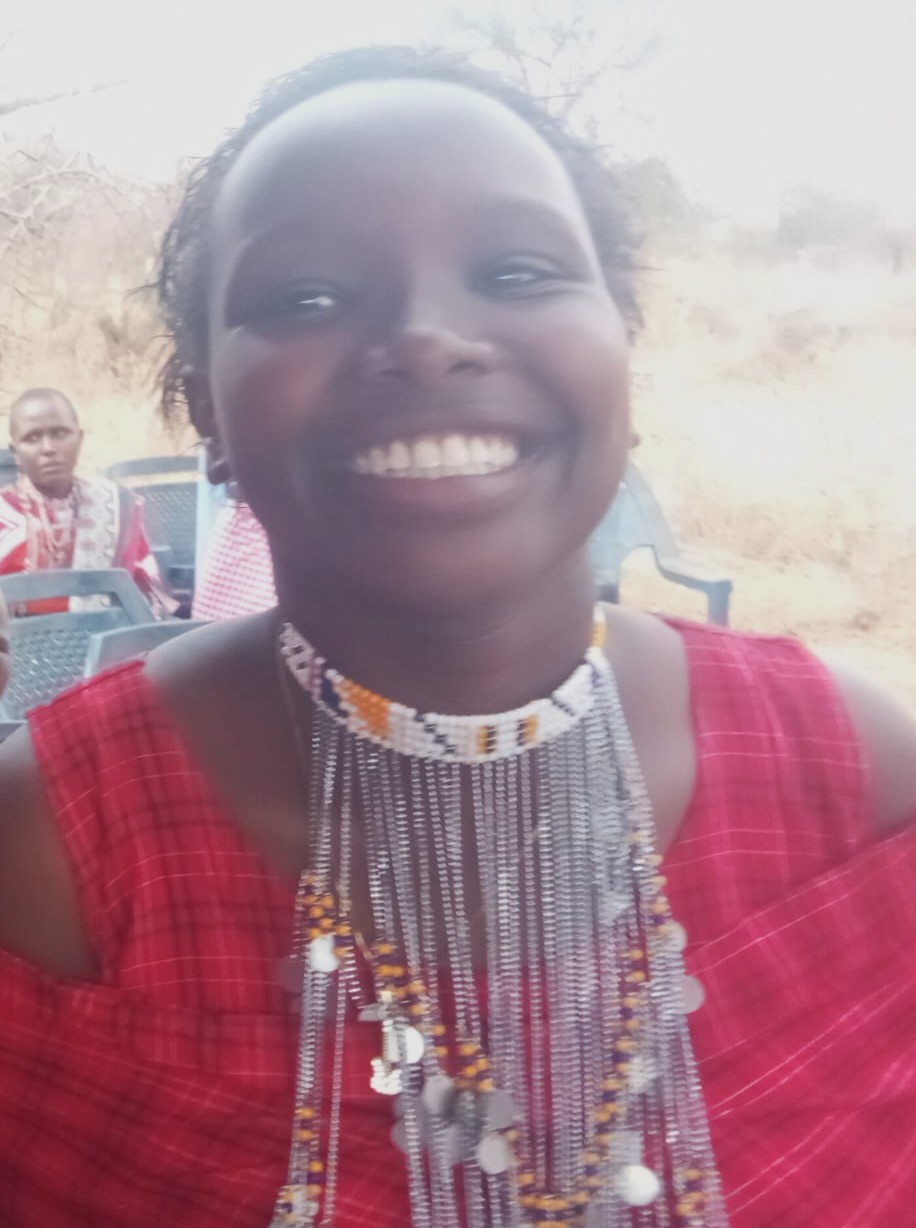
Age
15
Country of Residence
Kenya
Founding Story: What was the spark that led you to start your project? What was the "Aha!" moment that led you to get started and see the potential for this to succeed?
I did not begin as a leader. I began as a participant and then became a mobilizer. For the past two years, I have participated in environmental and livelihood activities in Lelei, Kajiado County. I watched our community come together to restore our environment despite a harsh and unpredictable climate. I saw women, families, and community leaders working together to plant, protect, and care for trees. Yet, as I became more involved, I noticed that young people were largely missing from this work. I began mobilizing my peers to participate, and in the process, one question stayed with me: what happens after a tree is planted? That question became my “Aha!” moment. I realized that planting a tree was only the beginning and that a young person can participate in a community activity without being given the responsibility to make decisions, solve problems, or take ownership. I began to see the tree differently. It could become a living classroom for responsibility and leadership. If a young person adopted a tree, cared for it, monitored its growth, protected it, and reflected on what it needed to survive, they would also be practicing leadership: responsibility, problem-solving, collaboration, and care for their community. Young people need opportunities to take responsibility and lead. A tree may take root in the soil; but I want young people to take root in their community.
How do you encourage other people to join your project or learn about the problem you’re working on? If you have a new idea, tell us how you will do this in the future.
I want every young person involved to do more than attend an activity. Currently, our five-member youth team has reached out to approximately 30 peers interested in ATI activities. These individuals will form the initial pool for our first cohort of Adopt a Tree stewards and youth leadership team. We will grow participation through peer outreach, community activities, schools, families and intergenerational learning. We will identify different skills and interests and create opportunities for young people to use and develop them. Those interested in monitoring can help design and maintain our tree-monitoring system; others can organize activities, mobilize peers, document stories, facilitate discussions or support community learning. As young people gain experience, they will take greater responsibility. Emerging leaders will mentor others, work with elders and community knowledge holders, identify gaps and co-create solutions. Our target is to reach approximately 200 young people and 500 community members and other actors over the next year, while building a growing network of youth leaders and Adopt a Tree stewards. I want a young person to say: “I started as a participant, adopted trees and learned to mobilize others. Through that responsibility, I discovered that I could contribute and collaborate in my community. I did not have to wait until adulthood to lead."
How many people are on your team?
5
Impact: How has your project created impact / made a difference so far? Or, if at an early stage, what will impact look like?
ATI is still at an early stage, but we are already seeing meaningful impact. Through activities supported by TeS Network, our community tree nursery has produced more than 22,000 indigenous seedlings, with over 13,000 trees planted across 7 acres with a survival rate of 98%, showing strong community commitment. Approximately 240 community members have participated in these conservation activities, including 30 young people who are increasingly taking responsibility and showing interest in leading conservation activities. The impact is beginning to extend beyond trees. Young people are developing a stronger appreciation of environmental conservation, and we see this as an important foundation for developing future community environmental leaders. Over the next 12 months, we aim to engage 100–200 young people, support 10–30 to take active leadership roles, establish a youth leadership team and an Adopt-a-Tree stewardship group, organize youth-led environmental and community actions, and facilitate intergenerational learning exchanges. We also aim to reach more than 500 community members as collaborators and mentors. We will measure impact through changes in the environment, households and community - tree survival, acres restored, and evidence of young people taking greater responsibilities in leadership roles, solving problems, communicating and mentoring their peers.
Project Category
My project is an existing project that I started
Project Stage
Pilot-Stage (We’ve tried an activity or two)
Project Summary: Describe your project in one sentence
Rooted to Lead is a youth-led community activity that uses Adopt a Tree initiative (ATI) model to turn environmental stewardship into a pathway for young people to build leadership skills, strengthen their voice, and contribute to their community’s future.
Project title
ROOTED TO LEAD: Our Community. Our Voice. Our Future
The Problem: What problem are you helping to solve? Why does it matter to you and your community?
Lelei Community faces growing environmental pressures, including tree cutting for charcoal, household needs, and livelihoods. When trees are removed faster than they are restored, vegetation is lost and pressure on the land increases. I recognize that many families depend on natural resources to meet their daily needs, so the solution is not simply to tell people to stop cutting trees. We need practical approaches that strengthen restoration and responsible stewardship. Also, young people have ideas, energy and a desire to contribute, but limited opportunities to take meaningful responsibility in addressing community challenges. They participate without being given opportunities to lead, make decisions, solve problems, and learn from real experience. This matters to me because I am a young person. I believe that when young people are trusted with responsibility, they can become active contributors to both environmental restoration and community development. ATI responds to these interconnected challenges by using environmental stewardship as a practical pathway for young people to develop leadership, teamwork, communication, problem-solving, and a sense of responsibility. I want young people to know that they do not have to wait until adulthood to contribute, they can start with an action, take responsibility, learn from experience, and grow into community leaders.
Website URL(s) or social media handles.
https://www.tesnetwork.org/
What’s Next: What are the next steps you plan to take to grow or strengthen your project over the next year? If your project is still in the idea stage, describe the steps you will take over the next three months to launch or begin developing it.
Over the next year, my focus will be to grow ATI from a small pilot into a youth-led community initiative. We will establish a youth leadership team with clear roles, mobilize young people, listen to their ideas, and identify their skills and talents so they can contribute meaningfully. Engage community members and partners through community dialogues to strengthen ownership and collaboration. We will develop a simple system to track activities and document challenges, solutions, lessons and successes. We will also use relevant online civic-leadership resources, peer learning and mentorship opportunities, including the Ashoka Changemaker community, and adapt what we learn to our local context. My goal is to reach 100–200 young people and support 10–30 to take active leadership responsibilities. Organize at least six youth-led environmental and community actions, engage approximately 500 community members and other actors, and hold at least four intergenerational learning exchanges in Lelei. Strengthen tree care through gapping and expand the community nurseries. At every stage, we will document, reflect and improve our actions. Emerging youth leaders will mentor others so that leadership and knowledge are shared rather than remaining with me or the current team.
Your Innovation: What is different about your project compared to other programs or solutions already out there? How is your project new or innovative?
The innovation is not planting or adopting a tree. It is what happens after the tree is planted and how that responsibility can become a pathway for young people to develop leadership. ATI connects tree stewardship with youth leadership. A tree becomes a living classroom, an adopter becomes a steward, and a steward can grow into an organizer and mentor. ATI asks a different question: “What happens to the person who takes responsibility for that tree?” Caring for a tree requires observation, communication, problem-solving, commitment and teamwork. As these skills grow, young people can take on greater responsibilities—organizing others, responding to challenges, sharing knowledge and mentoring peers. In this way, a conservation activity becomes a practical leadership pathway rather than a one-time environmental activity. ATI brings together two areas that are often treated separately: environmental stewardship and youth civic leadership. It also creates a space where young people and elders can learn from each other, combining community knowledge and experience with young people's energy, ideas and leadership. Our innovation is therefore a simple but important shift from asking, “How many trees did we plant?” to asking, “What did I learn? What responsibility did I take? Who did I help? What difference did I make in my community?” Through this approach, every adopted tree becomes an opportunity for a young person to practice responsibility, develop their voice, lead others and contribute to lasting community change.
Your Solution: How are you solving this problem? Share your specific solution.
The Adopt a Tree Initiative (ATI) is a youth stewardship model that turns a planted tree into an ongoing responsibility, learning opportunity, and pathway to leadership. Instead of measuring success by how many trees are planted, ATI gives young people responsibility for what happens after planting. A young person, family, school, or youth group adopts a tree and becomes its steward. The adopter learns about the tree, monitors its condition, protects it, and responds to challenges such as damage, drought, or poor growth. If a tree does not survive, the experience becomes a learning opportunity: the adopter identifies what went wrong and, where appropriate, replaces the tree through gapping. ATI works through a simple cycle of adoption, care, observation, action, and reflection. The tree provides a tangible responsibility through which young people practice skills that are difficult to develop through workshops alone problem-solving, communication, teamwork, decision-making, persistence, and accountability. As young people gain experience, responsibility expands beyond individual trees. Those who demonstrate commitment can mobilize peers, help organize stewardship activities, facilitate learning with community members, document lessons, and mentor other young people. In this way, leadership grows from demonstrated responsibility rather than being assigned as a title. ATI also connects youth stewardship with existing community knowledge. Young people learn from elders, community knowledge holders, and tree nursery practitioners, creating opportunities for intergenerational exchange while grounding the initiative in local realities. The model creates a clear progression: Participate → Adopt → Care → Learn → Act → Reflect → Lead → Mentor.
Your team: What role(s) do your team members play? How do you share leadership with them?
We are 5 active young people, including me. We jointly coordinate activities, mobilize peers, adopt and care for trees, monitor survival and gapping, and document lessons. We plan and implement activities during weekends and school holidays, followed by feedback sessions to share experiences and solve emerging challenges. I work with elders, families, schools, tree nursery practitioners and community leaders. TeS Network provides adult mentorship, safeguarding, and technical support.