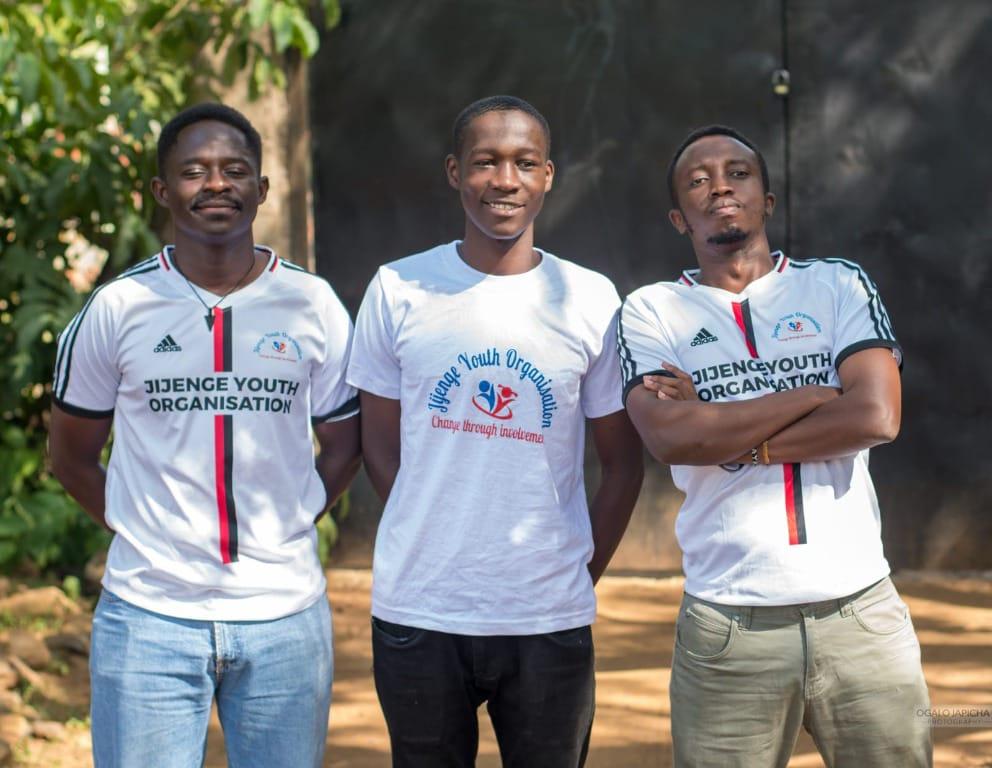
Country of Residence
Kenya
Project title
VIJANA SAUTI
Project Summary: Describe your project in one sentence
VIJANA SAUTI is a youth-led idea that will help young people in Kisumu use football, music, stories and honest conversation to check facts, protect peace and follow up on leaders' promises before, during and long after Kenya's 2027 elections.
Website URL(s) or social media handles.
https://jijengeyouth.org/
Project Category
My project is an existing project that I started
Project Stage
Pilot-Stage (We’ve tried an activity or two)
Founding Story: What was the spark that led you to start your project? What was the "Aha!" moment that led you to get started and see the potential for this to succeed?
My spark came during a conversation about accountability and governance with students from a local college. One student stood up and told us point blank: "The truth is, we elect leaders, but they end up moving to Nairobi and pursuing their personal interests, and we cannot do anything about it." Those words stayed with me. What worried me most was not only the complaint about leaders. It was the last part: "We cannot do anything about it." I heard frustration, and a feeling that our power ends once we vote. I started asking myself, "What if that is not true?" What if young people wrote down what leaders promise, checked the facts, and kept asking questions together, calmly and peacefully, long after election day? One voice may be easy to ignore. Many informed young people, working together, are harder to overlook. We may not be able to change everything, but we can do something. That moment led to VIJANA SAUTI: My Voice. My Choice. My Future. I want to create spaces where young people learn their rights, discuss what their communities need and follow up on public promises. I also want us to use football, music, stories and honest conversation to protect truth and peace. I do not have all the answers. But I believe that student's frustration can be the start of action, and that young people can move from "we cannot" to "let us try."
The Problem: What problem are you helping to solve? Why does it matter to you and your community?
Many young people in Kisumu County care about the future, but do not always have the information, skills or safe spaces to take part in a good way. Elections can make this harder. Fake news and hate speech can travel fast on our phones. Some young people may be used by political groups without seeing the risks. Friends can start to see each other as enemies because of tribe or political choice. When violence happens, it is ordinary families, businesses and young people who suffer. There is also a quieter problem. Our voices are wanted during campaigns, but after voting, few people ask what we think. Promises are made, and many of us do not know how to follow up. This matters to me because these are my peers and my community. Kenya goes to the polls on 10 August 2027. We have a chance to prepare before tension rises, and to show that young people can disagree and still respect each other. Our role does not end at the ballot. We can share the truth, protect peace and ask leaders to keep their word.
Your Solution: How are you solving this problem? Share your specific solution.
VIJANA SAUTI is a youth-led pilot for 180 young people in six communities in Kisumu County. It has four parts. 1. Sauti Circles: Small groups where young people meet to talk about rights, leadership, elections and local problems. Members listen to each other, agree on one need that matters to them and plan how to act. 2. Digital Truth Squad: Young people learn to check information and spot hate speech. They then create videos, posters and music that help their friends pause before they share. 3. Peace activities: Football, art, storytelling and community talks bring together people who may not usually meet or agree. 4. Promise Watch: We will write down promises that candidates make in public. After the election, young people will follow up and discuss them with the community. Here is how it could work: a member receives an angry political message. Instead of forwarding it, she brings it to the Truth Squad. They check it, and if it is false, share a simple correction in language their peers understand. We will train 30 peace ambassadors, create at least 20 awareness messages, and hold six peace activities and three accountability dialogues. We will not support any party or candidate. Everyone is welcome, including young women and young people with disabilities. Jijenge Centre for Social Development will mentor us while young people lead.
Impact: How has your project created impact / made a difference so far? Or, if at an early stage, what will impact look like?
VIJANA SAUTI is at an early stage, and our first steps have been conversations. We have held a few sessions with tertiary students on governance, and with high school students on responsible citizenship and what it involves. So far we have engaged about [number] students. These sessions showed me that young people need space to speak honestly about leadership and their own role. One college student told us that leaders are elected, move to Nairobi and pursue their own interests, and that we cannot do anything about it. I want to help change that. I picture a student who once felt unheard asking a clear, respectful question about a public promise. I picture another checking a message before sharing it, and young people with different views working as one. In our first year, we aim to: • Reach 180 young people in six communities through Sauti Circles • Train 30 Peace Ambassadors • Create at least 20 youth-made awareness messages • Hold six peace activities and three accountability dialogues • Reach 1,000 community members We will ask members short questions at the start and end to see whether their knowledge and confidence grow. We will also share their stories, with permission. I believe this can work because young people will choose the issues, create the messages and lead the activities. Now we want to turn conversation into action.
Your Innovation: What is different about your project compared to other programs or solutions already out there? How is your project new or innovative?
Civic education often happens in a hall, close to election time. People listen, go home, and the conversation ends. VIJANA SAUTI is designed to keep it going. Our idea began when a college student told us that leaders are elected, move to Nairobi to pursue their own interests, and that we cannot do anything about it. We want to give young people something they can do. First, we do not stop on election day. Through Promise Watch, young people will record candidates' public promises. After the vote, they will check progress using facts, discuss it with the community and ask leaders respectful questions. A promise made in a campaign becomes something young people can remember and follow. Second, young people are not just an audience. In small Sauti Circles, they will choose the local need that matters to them, decide how to act, test their ideas and change what is not working. Third, we start where young people are. Football, music, art and storytelling can welcome someone who would never attend a formal meeting about governance. A match can open a talk about peace. A song or short video can help a friend question fake news. Fourth, we connect phones and faces. Our Digital Truth Squad will respond to false information online, while Circles and peace activities build trust between people in person. These tools are familiar. What is new in our approach is joining them into one youth-led journey, from learning to truth, to peace, to follow-up. We welcome different views and support no party or candidate. Our hope is that a young person who once said "we cannot" can say, "Here is what we are doing."
How many people are on your team?
7
Your team: What role(s) do your team members play? How do you share leadership with them?
We are a team of seven, and I lead VIJANA SAUTI. Together, we will share community outreach, digital content, peace activities, record keeping, and inclusion and safety, based on each person's strengths. We will make key decisions together, meet monthly to check progress and take turns leading activities. As Sauti Circles grow, their own youth leaders will plan local action. Jijenge Centre for Social Development will mentor us while young people lead.
What’s Next: What are the next steps you plan to take to grow or strengthen your project over the next year? If your project is still in the idea stage, describe the steps you will take over the next three months to launch or begin developing it.
We have moved beyond the idea stage through sessions with tertiary students on governance and high school students on responsible citizenship. Over the next year, our team of seven will build on these conversations. December 2026 to February 2027: We will review what students told us, agree on team roles, choose six communities and recruit 30 youth leaders. We will seek parent or guardian consent where needed and ask start-up questions to measure change. March to April: We will open six Sauti Circles, train 30 Peace Ambassadors and form our Digital Truth Squad. May to August: Young people will create at least 20 awareness messages and lead six peace activities using football, art, music and storytelling. We will record candidates' public promises through Promise Watch. Around the August election, safety will come first. September to November: We will follow up on promises, hold three community dialogues, review results and share what worked and what did not. We will seek partnerships with colleges, high schools, community leaders and civil society groups for meeting spaces, learning and volunteers. Jijenge Centre for Social Development will continue to mentor us. We will train new youth leaders so the work does not depend on a few people. Our aim is to reach 180 young people and 1,000 community members and turn one-time discussions into lasting youth action.
How do you encourage other people to join your project or learn about the problem you’re working on? If you have a new idea, tell us how you will do this in the future.
We encourage others to join by starting with conversation. We have held a few sessions with tertiary students on governance and high school students on responsible citizenship. One college student told us that leaders move to Nairobi to pursue their own interests and that we cannot do anything about it. So we listen first. We invite young people to ask: "What would we like to change, and what can we do together?" Next, we will return to schools and colleges and reach youth groups and community spaces. Football, music, art and storytelling will welcome people who may not enjoy formal meetings. Everyone will have a way to help. A member can lead a discussion, create a video, translate a message, organise a match or keep track of leaders' promises. Quieter voices, young women and young people with disabilities are welcome. We will ask members to invite a friend, especially someone with a different view. We will share youth-made messages online and invite parents, teachers and community leaders to dialogues. We will ask consent before using anyone's story or photo.
